Destinations
Fes: The Cultural Heart of Morocco
By Morocco Explorers
9 min read
Fes travel guide: the medieval medina of Fes el-Bali, al-Qarawiyyin, the Chouara tanneries, Bou Inania Madrasa, where to eat and how to get there.

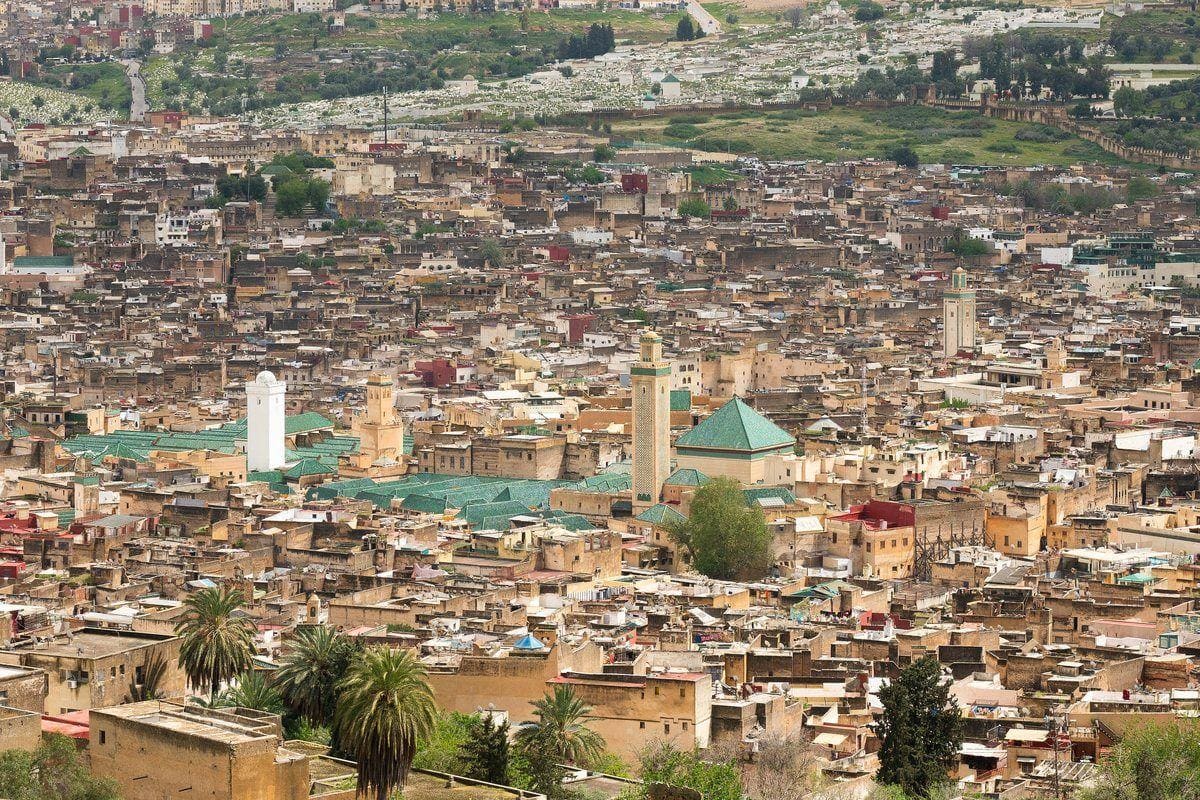
Fes is the cultural heart of Morocco and its oldest imperial city: a 1,200-year-old medina where donkeys still deliver goods, where the world's oldest continuously operating university sits beside a 14th-century water clock, and where the leather tanneries have dyed hides in the same stone pits for a thousand years. Give it three days, and visit between March and May or September and November.
This guide explains what to see in Fes, how to navigate Fes el-Bali without losing your way, what to eat, and how to arrive by train, plane or private transfer — written by the local team at Morocco Explorers.
Fes el-Bali is one of the largest car-free urban areas on earth: roughly 9,000 lanes, 300 mosques and 9,000 buildings inside the walls, all classified by UNESCO. It is not a museum — it is a working city of craftsmen, bakeries, schools and family homes.
Founded in 859 by Fatima al-Fihri, al-Qarawiyyin is recognised as the oldest continuously operating university in the world. Non-Muslims visit the courtyard and library surroundings; the prayer hall is closed to visitors. Read our al-Qarawiyyin guide.
Fes's largest leather tannery has been working since the medieval period. View it from a terrace (expect to be offered mint leaves against the smell) and see the honey, red and white dye pits below. Our Chouara tannery guide explains the process.
The Bou Inania Madrasa (1350–1356) is the only madrasa in Morocco with its own minaret, and the finest Marinid building in the city; al-Attarine, built a generation earlier, sits by the spice souk. Details in our Bou Inania guide.
The Royal Palace gates — giant brass doors under zellige and cedar — are one of Fes's most photographed spots. Beside them, the mellah (Jewish quarter, founded in the 15th century) holds the old synagogue and the market of the dead. See our Royal Palace gates guide.
A 19th-century palace turned museum of Fes craft — woodwork, embroidery and ceramics in an Andalusian garden. Our Dar Batha guide has opening details.
From Bab Bou Jeloud (the Blue Gate) down Talâa Kbira, the souks specialise by trade: Attarine for spices, Seffarine for copper, Dyers' souk, carpenters, leather. Look for Dar el-Magana's 14th-century water clock and step into a fondouk — the courtyard inns where caravans once unloaded.
Deeper dives: our Fes medina exploration guide.
Eat where the locals do: small family restaurants near the pride of Fes, not the terraces with picture menus on the main square.
| Season | Weather | Notes |
|---|---|---|
| March–May | 18–26°C | Best overall: warm days, cool mornings, green hills |
| June–August | 30–40°C | Hot and dry; explore early and late, rest at midday |
| September–November | 20–30°C | Excellent: clear light, comfortable medina walking |
| December–February | 10–17°C | Cool and rainy; the medina is atmospheric and quiet |
Fes is the classic starting point for the Sahara: see our 3-day Merzouga tour or the 7-day Imperial Cities tour from Fes and 10-day version.
Stay inside the medina in a riad or dar for the atmosphere — expect narrow lanes, no cars and a short walk from the nearest drop-off point. Talaa Kbira and the area around Bab Bou Jeloud are convenient for first visits; the Ville Nouvelle has modern hotels if you prefer wide streets and taxis.
We organise guided medina walks, craft and food tours, day trips to Meknes, Volubilis and Chefchaouen, and full imperial-city itineraries. Start from our Fes destination guide or browse all Morocco tours — and read our Chefchaouen guide to plan the next stop.
Fes rewards a slower pace. Hire a licensed guide for the medina, visit the tanneries from a terrace, and keep cash for small workshops.
Three days is ideal: one for the medina highlights with a guide, one for the tanneries, souks and madrasas at your own pace, and one for a day trip to Meknes, Volubilis or the Middle Atlas.
Yes — Fes el-Bali has thousands of lanes and no cars. Hiring a licensed guide for the first day is the single best investment; after that, the two main streets, Talâa Kbira and Talâa Sghira, will keep you oriented.
March to May and September to November, with mild temperatures of 18–30°C. Summers are hot and dry (30–40°C) and winters are cool and rainy but quiet.
By train: about 3.5–4 hours from Casablanca and Rabat, and around 7 hours from Marrakech. By road, a private transfer takes 5–6 hours from Marrakech. Fes-Saïss Airport (FEZ) handles international and domestic flights.
Yes. Chouara is a working medieval tannery and the best-known sight in Fes. View it from a terrace, accept the mint leaves for the smell, and be aware that terrace shops expect you to look at leather goods afterwards.
Pastilla (bastilla), b'ssara soup, harira, charcoal-grilled lamb and kefta, and the almond pastries and chebakia that Fes is famous for, with mint tea.
Yes: Meknes and the Roman ruins of Volubilis, the blue town of Chefchaouen, the Middle Atlas and cedar forests of Azrou, and the start of the Sahara route to Merzouga.
Fes is generally safe, but the medina has persistent unofficial guides and shop touts. Ignore unsolicited help, agree prices before services, keep bags zipped in crowds, and use licensed guides booked through your riad or tour operator.
Hero photo: Petar Milošević · CC BY-SA 4.0 · Wikimedia Commons