Highlights
Royal Palace Gates: Golden Splendor
By Morocco Explorers
7 min read
Fes Royal Palace guide: the monumental brass gates of the Dar el-Makhzen, the story of Fes el-Jdid, the mellah quarter and how to see it respectfully.

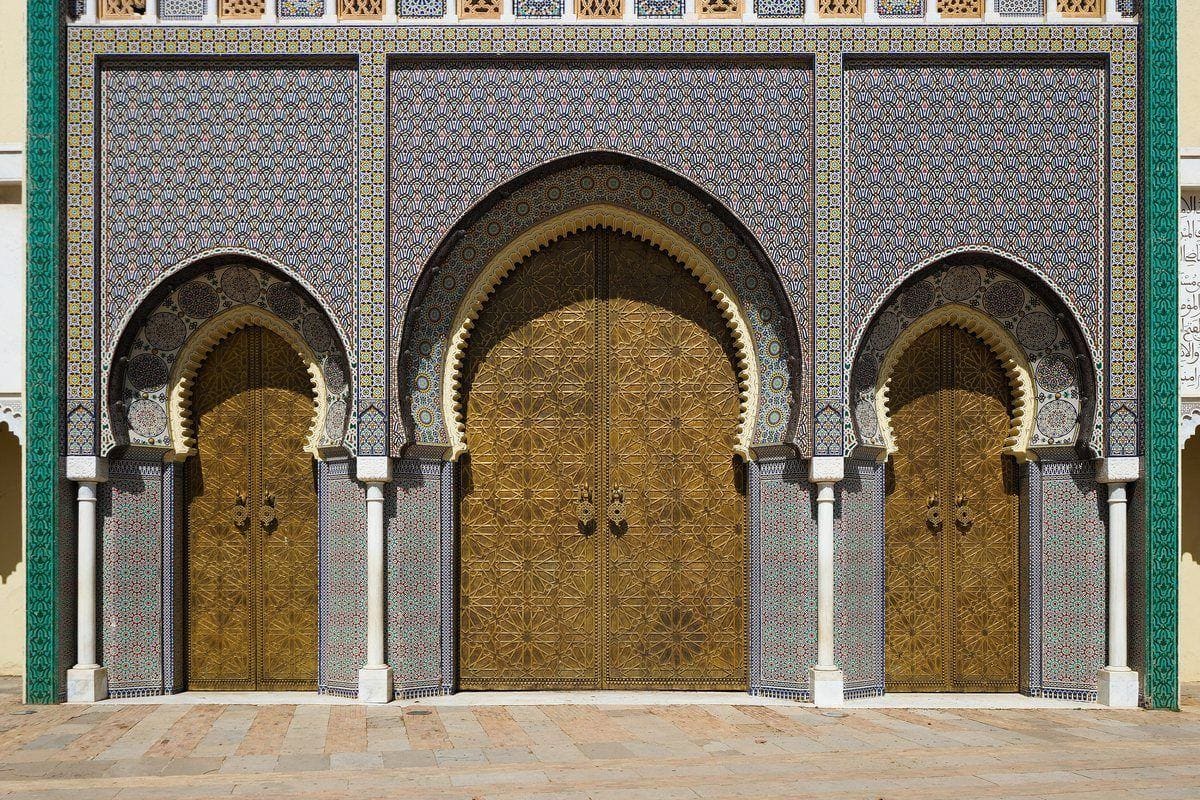
The Royal Palace of Fes is a working royal residence, but its gates are a public spectacle: monumental doors of brass and cedar set in walls of zellige, standing on Place des Alaouites in Fes el-Jdid, the "new" city the Marinids built in the 13th century. You cannot go inside; you come to photograph the gates, walk the square and wander the old mellah (Jewish quarter) beside it. Half an hour to an hour is enough, and it pairs perfectly with nearby Dar Batha.
This guide covers the palace, its gates and the quarter around them — written by the local team at Morocco Explorers.
Fes el-Bali gets the crowds, but Fes el-Jdid holds the ceremonial face of the city: broad squares, the royal palace and the mellah. The palace gates are among the finest in Morocco — polished brass doors and carved plaster in a composition that has been photographed for a century — and the contrast with the medieval lanes is the point. It is a stop for understanding how the royal city grew beside the old one, and a quiet place to walk at the start or end of a medina day.
The Marinids founded Fes el-Jdid in 1276 as a royal and military city beside Fes el-Bali, with the palace at its centre. Later dynasties enlarged the palace, and the Alaouite sultans gave it much of its present aspect; it remains a residence of the royal family and is closed to visitors. The mellah, established in the 15th century, grew beside the palace as the Jewish quarter of Fes, with its own synagogues, markets and cemeteries — a chapter of Moroccan history that is being restored and retold today.
The great gate is the climax: tiers of zellige and carved plaster around doors of brass, with the palace wall running away on both sides. Guards are present — photograph from the square, do not block the entrance and do not attempt to enter.
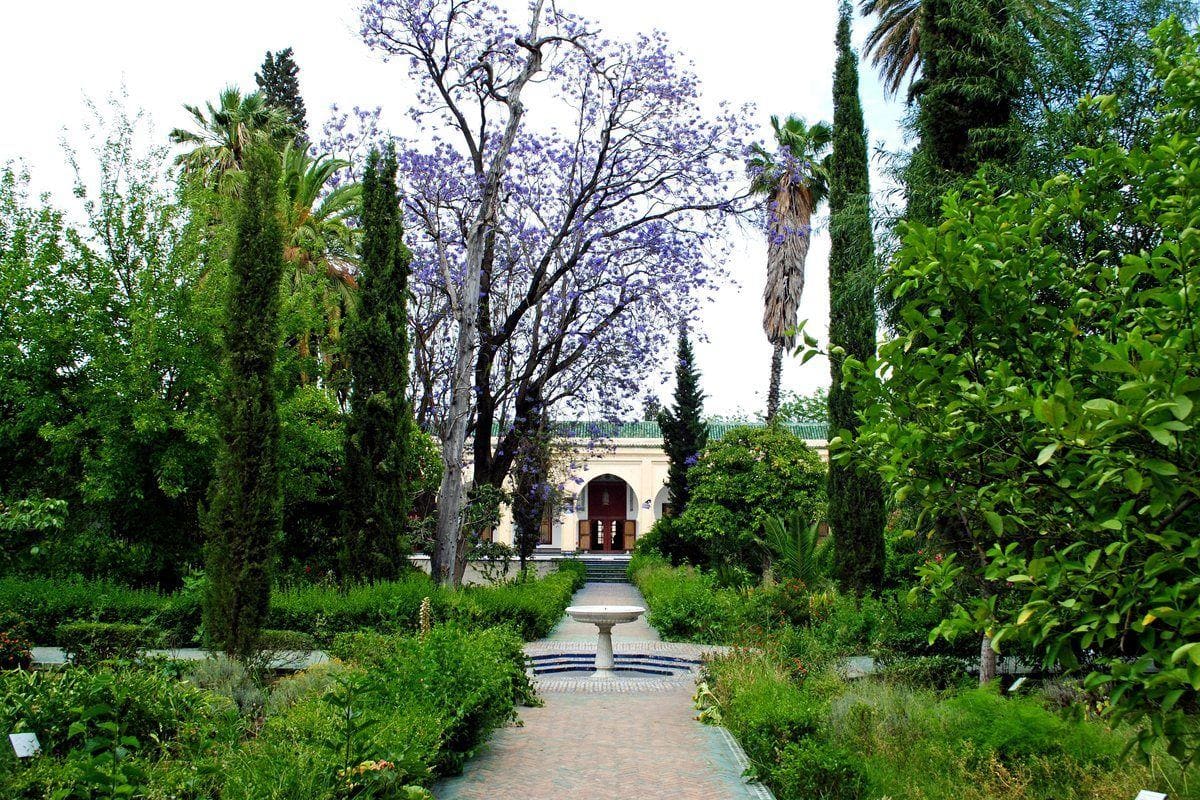
Walk the square and along the walls: the scale of the complex explains how the royal city was laid out. The fountains, lamps and gardens make this one of the most pleasant evening strolls in Fes.
Beside the palace, the mellah's lanes still carry the memory of Fes's Jewish community: balconied houses, the market streets, and the restored Aben Danan Synagogue, which can be visited and tells the story of the quarter. See the Visit Morocco page.
Beyond the ceremonial core, Fes el-Jdid is a working city: markets, the great mosque of the new town and streets where locals shop. It is calmer than the old medina and worth an unhurried hour.
The palace sits between the UNESCO-listed medina and the modern city — the Medina of Fes begins at its doorstep.
| Season | Weather | Notes |
|---|---|---|
| March–May | 17–26°C | Ideal for walking the squares and the mellah |
| June–August | 30–38°C | Come early or at dusk; the squares offer little shade at noon |
| September–November | 20–30°C | Excellent: golden light on the brass gates |
| December–February | 10–18°C | Quiet and crisp; the gates look their best in clear winter light |
Ramadan evenings are especially atmospheric around the palace squares, with families out after iftar.
Our medina and city walks include Fes el-Jdid, the palace gates and the mellah, with licensed guides and private drivers who know where to drop you. Book an imperial cities tour from Fes or browse all Morocco tours — and tell us your dates.
The Royal Palace gates are a photo stop, not an interior visit. Come in the morning for softer light and continue to the Mellah and the nearby medina lanes.
No — it is a working royal residence and closed to the public. Visitors come to see the monumental gates and squares from outside, which is the attraction itself.
On Place des Alaouites in Fes el-Jdid, the royal city built beside the old medina in the 13th century, within walking distance of Dar Batha and the mellah.
They combine polished brass doors with zellige and carved plaster on a monumental scale, and are considered among the finest gates in Morocco — a ceremonial face for the royal city.
The 'new' city founded by the Marinids in 1276 as a royal and military quarter beside Fes el-Bali. It holds the palace, the mellah and a life of its own, calmer than the old medina.
Yes — the historic Jewish quarter beside the palace can be walked freely, and the restored Aben Danan Synagogue is visitable and recounts the community's history.
Thirty to forty-five minutes for the gates, square and walls; add an hour for the mellah and the streets of Fes el-Jdid.
Yes — the gates and squares are among the most photogenic and historically layered corners of Fes, and they pair perfectly with the museums and mellah nearby.
Modest clothing and quiet respect: photograph from the square, keep clear of the entrance, follow the guards' instructions and remember people live and work around the palace.
Hero photo: Petar Milošević · CC BY-SA 4.0 · Wikimedia Commons