Destinations
Chefchaouen: The Blue Pearl of Morocco
By Morocco Explorers
8 min read
A complete guide to Chefchaouen: the blue medina, the Spanish Mosque sunset, Ras El Maa, Akchour waterfalls, when to go and how to get there from Tangier or Fes.

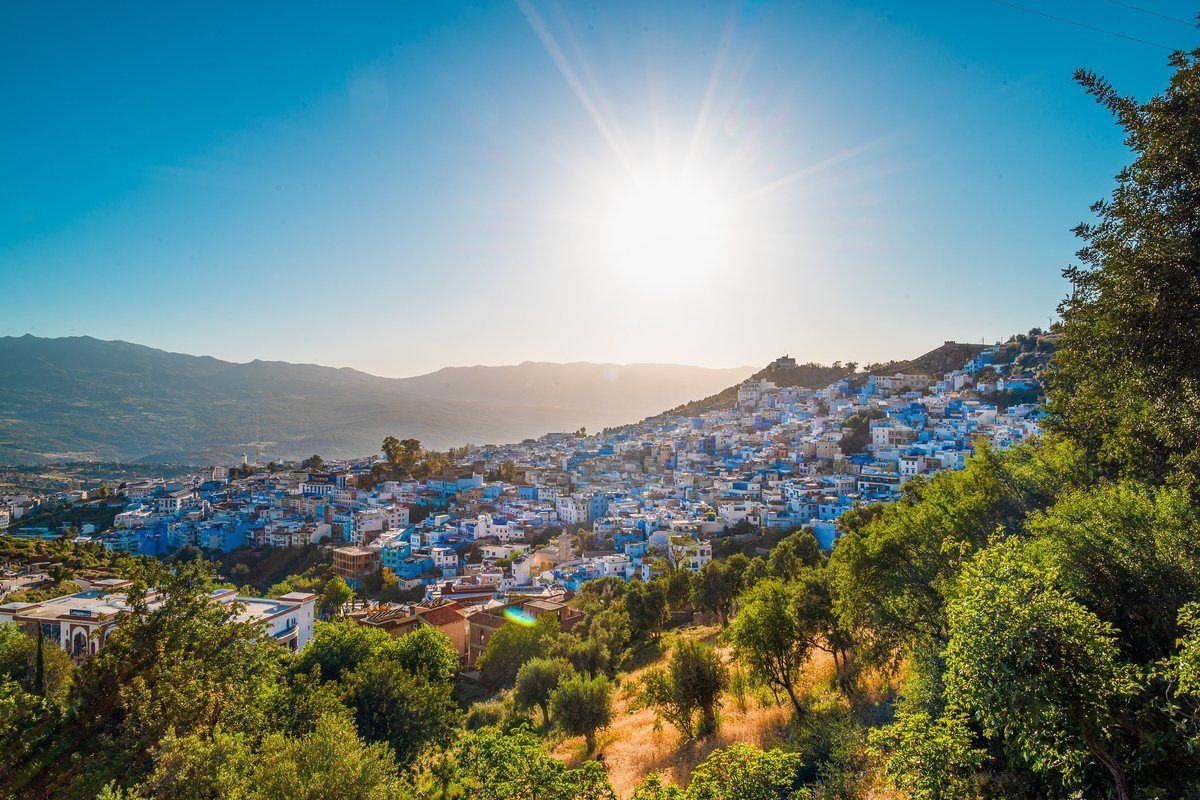
Chefchaouen is the blue pearl of the Rif Mountains: a small medina painted in every shade of blue, founded in 1471 and still wrapped around a spring that has supplied the town for five centuries. You can see the highlights in two to three days — the blue lanes, the Spanish Mosque at sunset, Ras El Maa and a hike at Akchour — and the best months are April to June and September to November.
This guide covers what to see, where to eat, when to go and how to reach Chefchaouen from Tangier, Fes or Casablanca — written by the local team at Morocco Explorers.
Perched at about 600 metres in the Rif, Chefchaouen was founded as a fortress against Portuguese raids and later grew with Andalusian and Jewish families who settled here after 1492. Its blue-washed lanes, the mellah (old Jewish quarter), the kasbah and the spring of Ras El Maa make it unlike any other Moroccan city — and the surrounding Talassemtane mountains are part of a UNESCO biosphere reserve.
The main square, shaded by a huge plane tree, is the natural starting point. Beside it stands the kasbah with its Andalusian garden and a small ethnographic museum; climb the tower for the classic view over the blue rooftops.
Wander without a map: Rue El Asri, the stairs near Bab Souk and the old Jewish quarter are the most photographed parts of town. Mornings before 10:00 and evenings after 17:00 give the softest light and the fewest groups.
The spring on the eastern edge of the medina still powers traditional washing areas and water mills. Follow the stream uphill through the olive terraces for views back over the town.
Twenty to thirty minutes uphill from Ras El Maa, the Spanish Mosque (built in the 1920s) is the best sunset viewpoint in Chefchaouen. Take water and a torch for the walk back.
About 40 minutes north, Akchour is the gateway to the Cascades d'Akchour and the natural arch known as the Pont de Dieu (God's Bridge). Hikes range from an easy hour to a full day; guides can be arranged in town. The Talassemtane National Park protects the rare Moroccan fir and is part of the Mediterranean biosphere reserve.
| Season | Weather | Notes |
|---|---|---|
| March–May | 15–24°C | Best time: wildflowers, green hills, comfortable walking |
| June–August | 25–35°C | Warm but cooler than Marrakech; book early, it is popular |
| September–November | 17–28°C | Excellent: clear light, olive harvest, fewer crowds in November |
| December–February | 8–15°C | Cold and rainy, snow on the high Rif; the blue looks deepest in the rain |
Ramadan is a quiet, atmospheric time to visit; some restaurants close by day and reopen for iftar.
Chefchaouen has no airport or train station. The usual approaches are:
CTM and other buses run daily, but a private driver-guide is the easiest way to combine Chefchaouen with Fes, Tangier or the Rif. Our multi-day northern itineraries include it: see the 7-day Imperial Cities tour from Fes or the 10-day version.
Two days are enough for the medina, Ras El Maa and the Spanish Mosque sunset. Add a third for Akchour or a longer hike in Talassemtane. Photographers and hikers often stay four or five nights and use the town as a base.
We arrange private transfers, riads in the medina and guided hikes around Chefchaouen as part of longer northern Morocco itineraries. Start from our Chefchaouen destination guide or browse all Morocco tours — and read our Fes guide and Tangier guide to link the route.
Photograph the blue streets before 10am, when tour groups arrive. Stay overnight to see the town quiet down, and hike to the Spanish Mosque for sunset.
There is no single documented reason. The most repeated explanations are Jewish tradition (blue as a spiritual colour), that blue paint repels insects in the heat, or simply that a mayor ordered it in the 1930s. Today the town repaints its lanes every year for beauty and tourism.
Two days cover the blue medina, Ras El Maa and the Spanish Mosque sunset. Add a third day for the Akchour waterfalls or a hike in Talassemtane National Park.
April to June and September to November, with mild days of 17–28°C. Summer is warm but cooler than Marrakech, while winter is cold and rainy with snow on the high Rif mountains.
By road only. Tangier is about 2 hours away, Fes about 4 hours, Casablanca 5–6 hours. Buses run daily, but a private transfer with a driver-guide is easier and can combine Fes, Tangier and the Rif.
Yes — it is unlike any other Moroccan city, with a compact walkable medina, mountain scenery, good food and a relaxed pace, and it pairs naturally with Fes or Tangier on a northern itinerary.
Walk up to the Spanish Mosque, 20–30 minutes from Ras El Maa, for the best view over the blue town and the Rif. Take water and a torch for the walk down.
Yes. The easiest walk is to the Spanish Mosque and the Ras El Maa terraces. For a full day, go to Akchour for the Cascades and the Pont de Dieu, or hire a guide for Talassemtane National Park.
Yes, it is one of the calmest tourist towns in Morocco. Use normal caution on steep stairs, ignore unofficial guides and offers of kif, which is illegal, and carry cash for small purchases.
Hero photo: Badr Rachadi · CC BY-SA 4.0 · Wikimedia Commons