Destinations
Agadir: Sunshine Coast
By Morocco Explorers
8 min read
Agadir travel guide: the long Atlantic beach, Agadir Oufella kasbah, Souk El Had, Taghazout surf, Paradise Valley and the best season for Morocco's winter-sun resort.

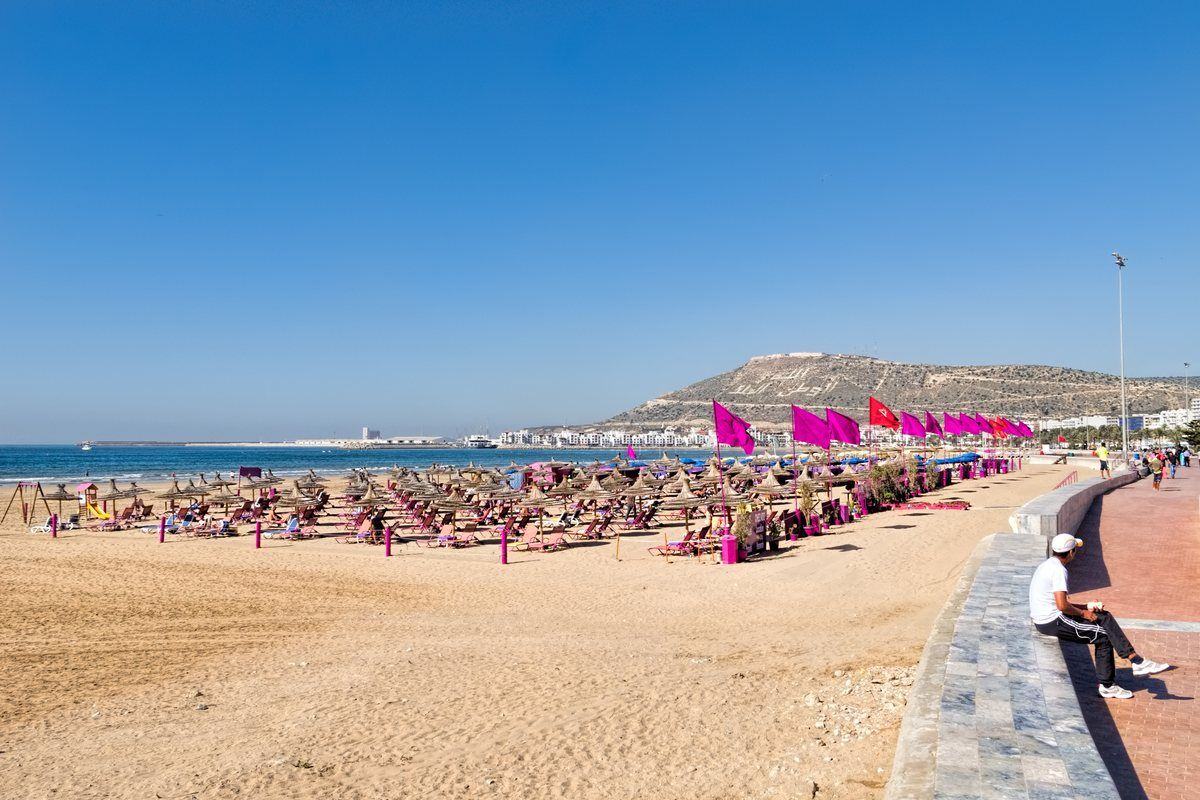
Agadir is Morocco's beach capital: a wide crescent of Atlantic sand backed by a modern city of palm-lined boulevards, rebuilt after the 1960 earthquake and now the country's favourite winter-sun resort. Come for the beach and the mild climate, stay for the kasbah view, Souk El Had and the surf villages of Taghazout up the coast. Three or four days are enough to relax and explore; October to April is the classic season.
This guide covers what to see, where to eat, when to go and how to get there — written by the local team at Morocco Explorers.
Agadir trades the mazes of the imperial cities for space and light. After the 1960 earthquake, the city was rebuilt south of the old kasbah hill with broad avenues, gardens and a promenade along a beach that runs for some ten kilometres. It is the rare Moroccan city where a beach holiday and a serious mountain or desert excursion can start from the same hotel.
The seafront is the heart of the resort: kilometres of sand from the marina towards the mouth of the Souss, with the palm-lined corniche behind it. Mornings are calmest for swimming; the wind usually picks up in the afternoon.
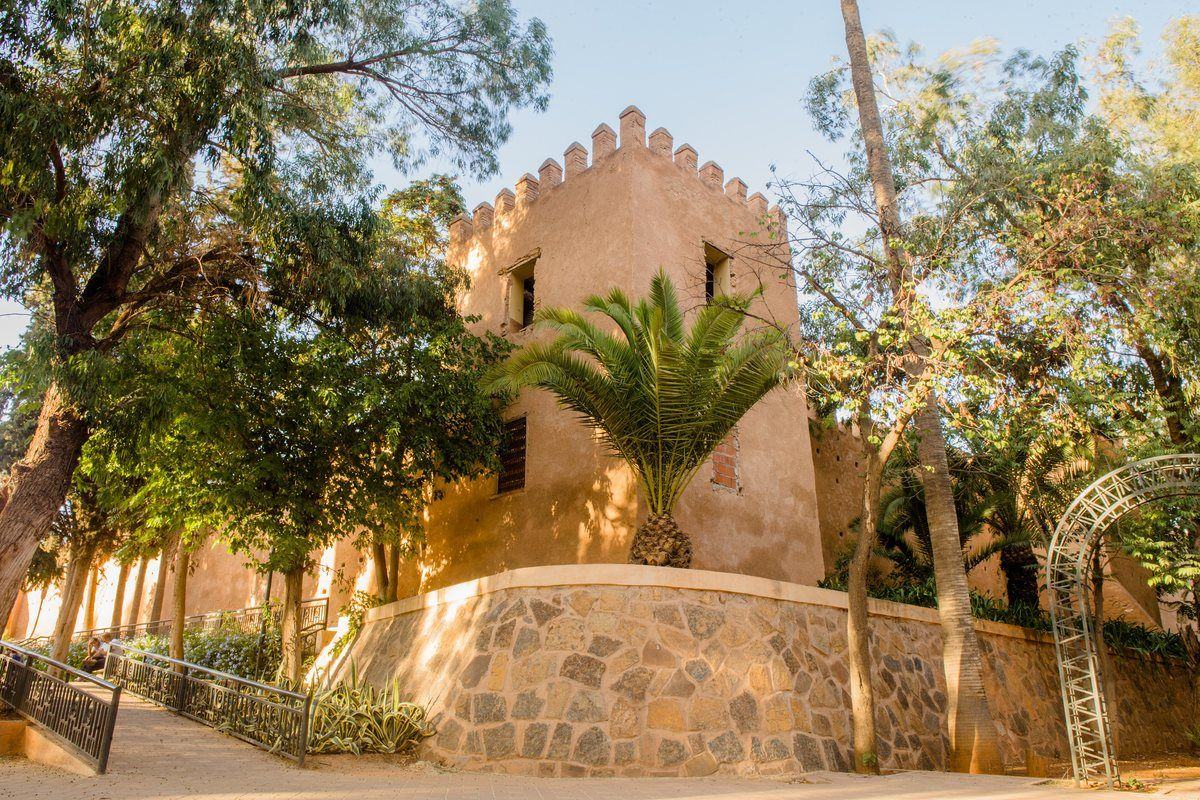
The ruined kasbah on the hill above the city survived the 1960 earthquake and is the best viewpoint in Agadir: the bay, the port and the sweep of the coastline all at once. Go for sunset, and take the hillside path if you have the energy.
This vast market is one of the largest in Morocco — hundreds of stalls under one roof: spices, argan oil, leather, ceramics, produce and household goods. Arrive in the morning, keep small notes handy and treat the food section as part of the visit.
The small Amazigh heritage museum downtown displays Tashelhit jewellery, carpets and crafts — a useful introduction to Souss culture. With children, the Vallée des Oiseaux garden in the city centre is an easy hour among birds, fountains and shade.
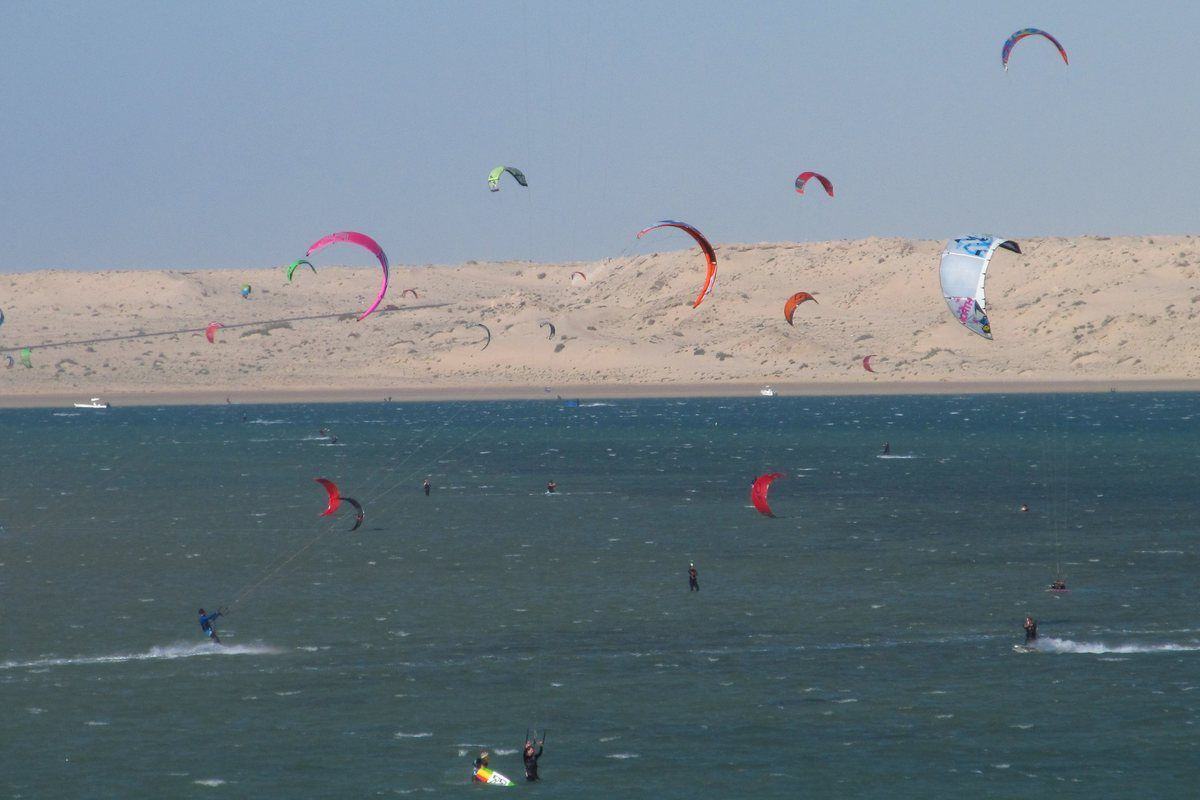
North of Agadir, the coast becomes one of the world's surf destinations: Taghazout, Tamraght and the small villages around them are full of surf camps, and the point breaks — Anchor Point and Killer Point among them — are known to surfers everywhere. The main swell season runs from autumn to spring, while summer is gentler and better for learning. Windsurfers and kitesurfers get their season from spring to autumn, when the trade wind fills the bay.
Even if you do not surf, Taghazout is worth an afternoon: a fishing village turned relaxed surf town, with rooftop cafés and a beach that catches the sunset. Read our Essaouira guide for more of the Atlantic coast.
For the desert, Agadir is a natural starting point for a longer loop: see our Sahara guide and the 3-day Merzouga tour from Marrakech, or the 4-day version.
| Season | Weather | Notes |
|---|---|---|
| March–May | 20–24°C | Warm days, spring flowers in the valley; ideal for beach and day trips |
| June–August | 24–28°C | Sunny and breezy; morning cloud possible and the sea still cool |
| September–November | 22–27°C | Excellent: warm sea, clear light, surf season starting |
| December–February | 18–22°C | Mild winter sun, cool evenings; the classic escape season |
Temperatures here are coastal and mild; inland day trips to Taroudant or Tafraoute can be much warmer in summer. The sea is coolest in late winter and warmest in early autumn.
We are a local Moroccan agency: airport transfers, riads and beach hotels, surf camps and private tours across the Souss and the south. Browse our Morocco tours, start from our Agadir guide, or read the Marrakech guide if you are combining the two — and tell us your dates.
Agadir is a beach base, not a medina town. Use it for the promenade, Taghazout and a hammam, and keep a day for the Anti-Atlas.
Yes, for a beach holiday with Moroccan flavour: a long Atlantic beach, mild winter sun, the kasbah viewpoint and the surf villages of Taghazout. It is also a good base for Paradise Valley, Taroudant and the Anti-Atlas.
Its long Atlantic beach and year-round mild climate, the ruined kasbah of Agadir Oufella above the bay, the vast Souk El Had and the nearby surf coast of Taghazout and Tamraght.
October to April for mild, sunny days; March to May and September to November are the sweet spots. Summer is warm and breezy rather than hot, though the sea stays cool.
Yes, in the lifeguarded central section of the beach. The Atlantic has currents and a strong shore break, so follow the flags and swim where others swim, not on empty stretches.
Fly into Agadir Al-Massira airport (AGA), about 25 km from the centre, or take a CTM or Supratours bus or drive the A3 motorway from Marrakech in around three hours. There is no train to Agadir yet.
Yes — Taghazout, Tamraght and the surrounding villages are among the best surf destinations in Africa, with point breaks and surf camps for all levels. The main swell runs from autumn to spring.
Paradise Valley, Taroudant and the Tiout oasis, Tiznit and the Souss-Massa National Park, or Tafraoute in the Anti-Atlas with more time. Desert tours towards Merzouga also start from this region.
Three or four days: two for the beach and the kasbah, one for a day trip and one more for Taghazout or Taroudant. A week makes a relaxed beach-and-explore holiday.
Hero photo: Dan Lundberg · CC BY-SA 2.0 · Wikimedia Commons