Destinations
Laayoune: Capital of the South
By Morocco Explorers
8 min read
Laayoune guide: Mechouar square, Spanish-era streets, the Atlantic beaches of El Marsa and Foum El Oued, Sahrawi culture and the kitesurf coast of Morocco's deep south.

Laayoune is the capital of Morocco's deep south: a wide, white city on the Atlantic edge of the Sahara, founded by Spain in 1928 and grown into the largest city of the southern provinces. Come for the empty beaches, the Spanish-era squares and streets, and the Sahrawi culture of tea, camel and desert music — plus the constant wind that makes this coast a kitesurfer's secret. Two days is enough; October to May is the season.
This guide covers the city and its coast — written by the local team at Morocco Explorers.
Laayoune is not a resort; it is a real Saharan city, and that is its charm. The Atlantic keeps the climate mild while the desert begins at the last roundabout: you can drink mint tea on a Spanish colonial square in the morning and stand alone on a beach with no one in sight an hour later. It is the gateway to the deep south — Dakhla is a day's drive further — and the best place to understand Sahrawi life without a tour bus in front of you.
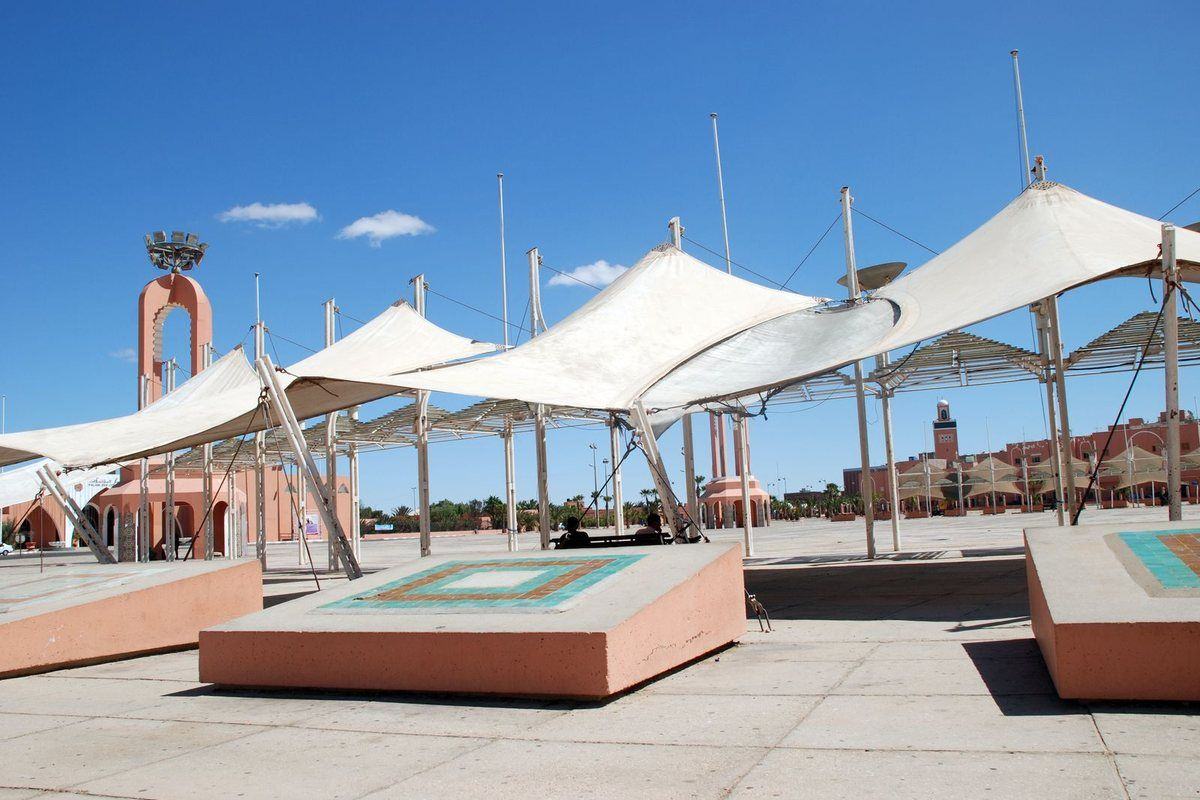
The heart of the old city is the Mechouar, a broad square in Spanish Saharan style surrounded by white arcaded buildings, with the cathedral of Saint Francis nearby. The grid of streets around it — a planned colonial town dropped into the desert — is pleasant to walk in the morning light.
Laayoune's covered market is a Saharan market: camel meat, dates, desert herbs, leather and silver, plus everything the region imports. The tea houses around it serve the Sahrawi ritual properly — three glasses, poured from a height, each with its own meaning.
Sahrawi culture lives in the spoken word: poetry, songs and the Azawan repertoire of tidinit and drums. Ask about local performances and crafts — leatherwork, silver and woven wool — and visit the craft cooperatives rather than tourist shops.
Ten minutes from the boulevards, the city ends and the hammada begins: stony desert where camel herds pass and the horizon is perfectly flat. Sunset and the night sky here are the reason photographers make the journey south.
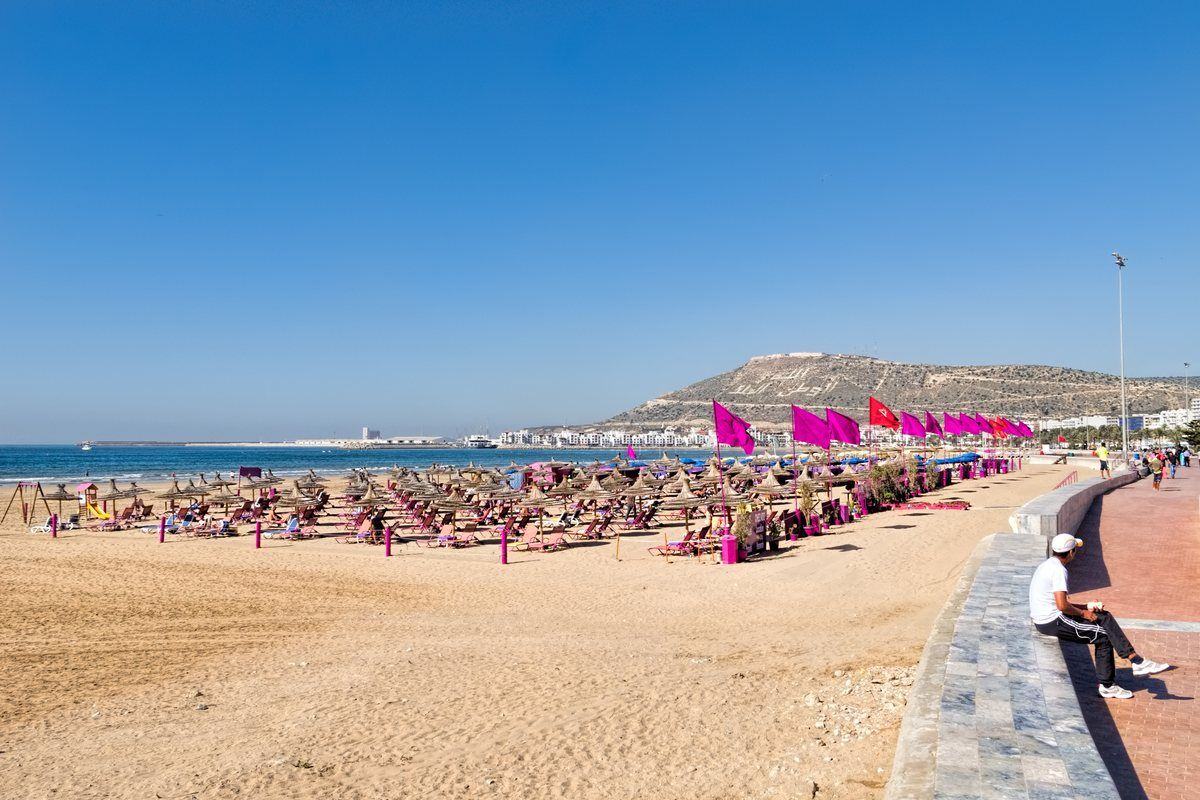
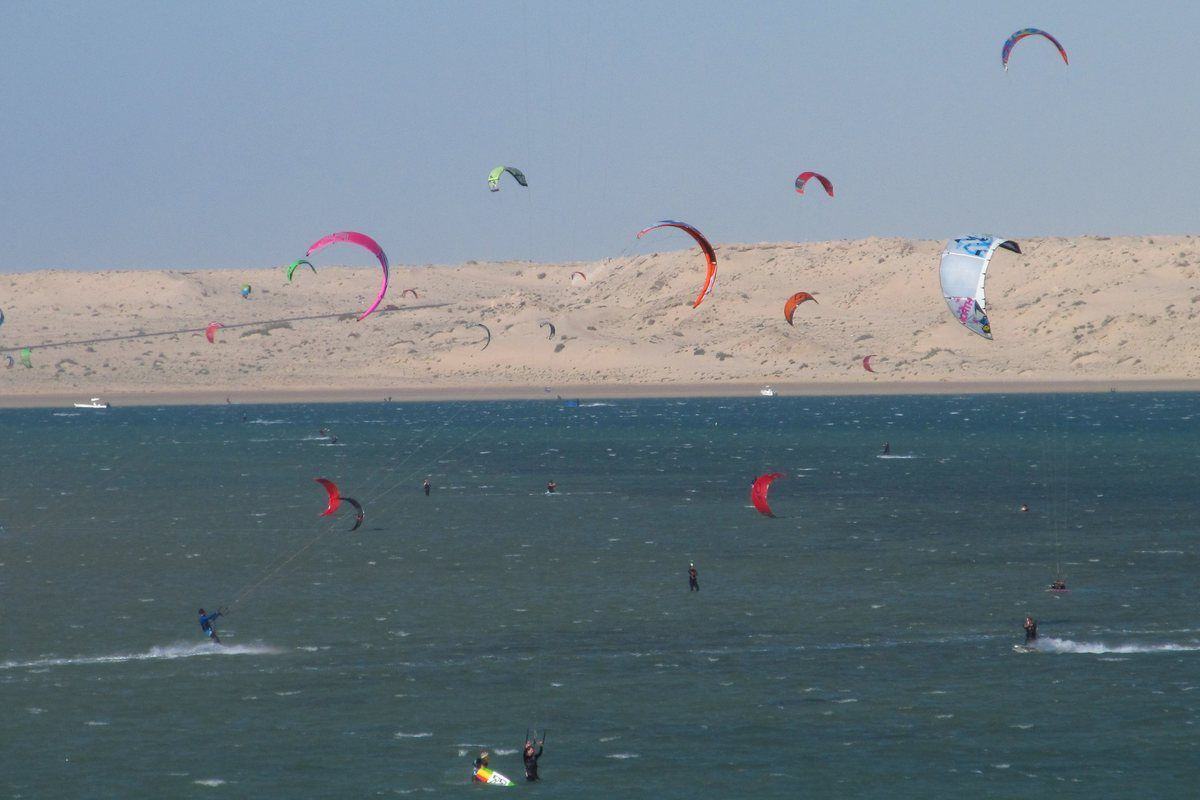
North of the city, El Marsa — Laayoune Plage — has a long Atlantic beach, seafood restaurants and the port that ships the region's phosphates. South, Foum El Oued sits at the mouth of the Sakia El Hamra river, with a lagoon, a laid-back beach scene and flat water that has made it a quiet kitesurf and windsurf spot. The wind is constant here for much of the year — bring a jacket even in summer.
| Season | Weather | Notes |
|---|---|---|
| October–November | 22–27°C | Ideal: warm days, cool nights, clear skies |
| December–February | 18–23°C | Mild days and cold nights; coastal fog possible in the morning |
| March–May | 22–28°C | Excellent: steady wind, good beach weather |
| June–September | 25–32°C | Warm, dry and windy inland; the coast stays bearable |
The ocean keeps Laayoune cooler than the interior, but the wind is relentless — a windbreaker earns its place in every bag.
We organise private drivers, desert itineraries and beach stays along Morocco's southern coast, from Agadir to Laayoune and Dakhla. Browse our Morocco tours or start from our Agadir guide and Sahara guide — and tell us your dates.
Laayoune is a calm introduction to southern Morocco. Visit Place Mechouar, the cathedral and the market, and allow time to adjust to the slower pace.
Yes, if you want a real Saharan city and empty Atlantic beaches rather than a resort. The Spanish-era centre, the Sahrawi tea culture, the coast at El Marsa and Foum El Oued and the desert skies are the reasons to come.
It is the largest city of Morocco's southern provinces, with Spanish colonial architecture around Mechouar square, a lively Saharan market, Sahrawi culture and a windy Atlantic coast popular for kitesurfing at Foum El Oued.
The easiest way is to fly to Laayoune Hassan I airport (EUN) from Casablanca, with connections to Agadir and Dakhla. By road, the N1 runs south from Agadir along the coast — a long but scenic desert drive.
Yes, at El Marsa and the beaches around Foum El Oued, though the Atlantic here is cool and the wind strong. It is more a walking, kitesurfing and beach-rest coast than a warm-water swimming destination.
Yes — the coast is windy for much of the year, which is why Foum El Oued has become a quiet kitesurfing spot. The upside is mild temperatures even in summer; pack a windbreaker.
It is a long day's drive south, or a short domestic flight. Many travellers combine both cities in a four- to five-day southern loop; see our Dakhla guide for the coast further down.
October to May, with mild days and cool nights; March to May is especially good for the beach and the wind. Summer is warm and dry, though the ocean keeps the city cooler than the interior.
Layers and a windbreaker, sun protection, comfortable shoes and cash. Evenings can be cold in winter, and the wind on the coast is constant, so a light jacket is useful year-round.
Hero photo: Bertramz · CC BY-SA 3.0 · Wikimedia Commons