Highlights
Al Quaraouiyine: Oldest University
By Morocco Explorers
7 min read
Al Quaraouiyine guide: the Fes university founded by Fatima al-Fihri in 859, its library, what visitors can see of the mosque-university and how to visit respectfully.

Al Quaraouiyine is one of the oldest universities in continuous operation in the world, founded in Fes in 859 by Fatima al-Fihri, a merchant's daughter who used her inheritance to build a mosque and a place of learning. Non-Muslims cannot enter the prayer hall, but its gate, minaret and medina setting are open to every visitor — and the story of the library next door, restored and reopened in 2016, is one of the great chapters of Fes. Pair the visit with the medina walk around it.
This guide covers the history and what you can actually see — written by the local team at Morocco Explorers.
For more than a thousand years this was one of the intellectual centres of the western Islamic world: a place where Maliki law, theology, grammar, medicine and astronomy were taught to students who came from across North Africa, Al-Andalus and beyond. Its founding by a woman in the 9th century makes it extraordinary in the history of education, and its library preserves manuscripts and a 9th-century Qur'an. Whatever your interests, standing at its doors is standing at the origin of the university idea in this part of the world.
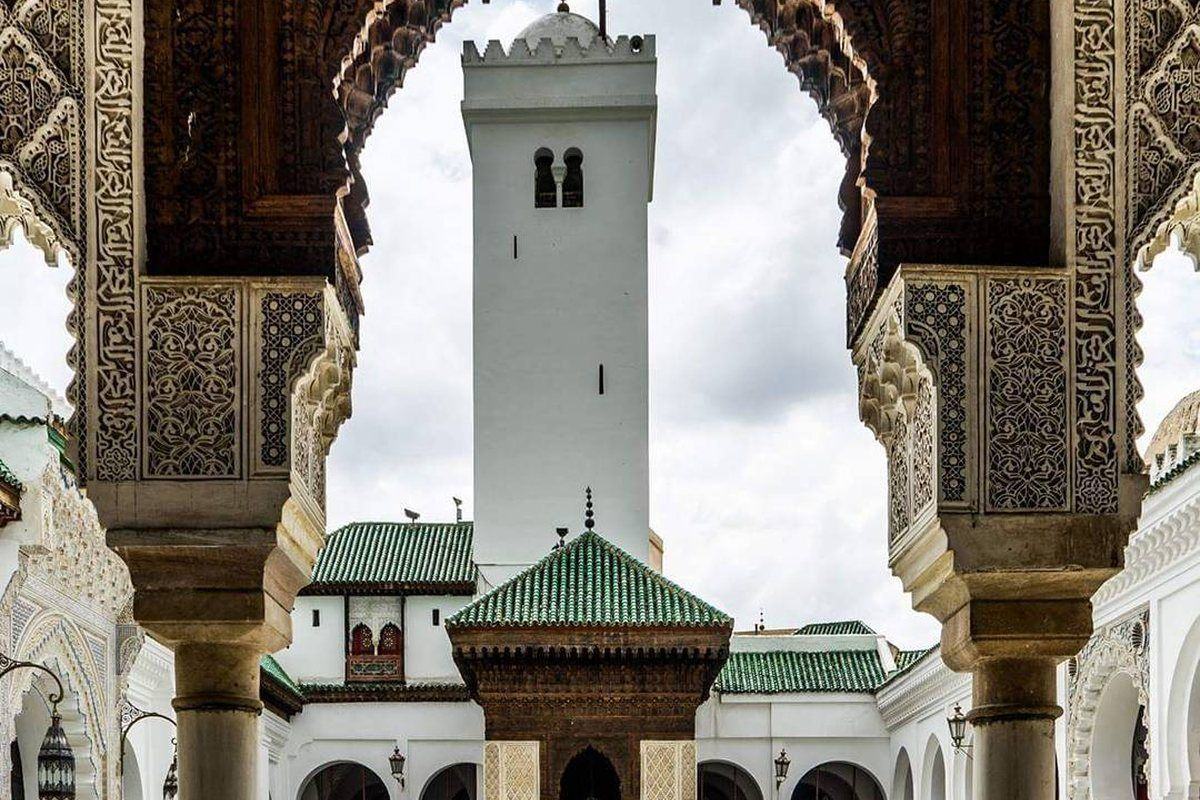
The mosque was founded in 859 and grew with the city: the Almoravids and Almohads enlarged it, the Marinids added to its prestige, and by the medieval period it was a magnet for scholars. Teaching continued through the centuries, and in the 20th century the institution was reformed as a modern university with faculties in Fes. The mosque-university itself, with its green roofs and ancient courtyard, remains the spiritual heart of the medina — the starting point for the street of the bookbinders and the scholars' quarter around it.
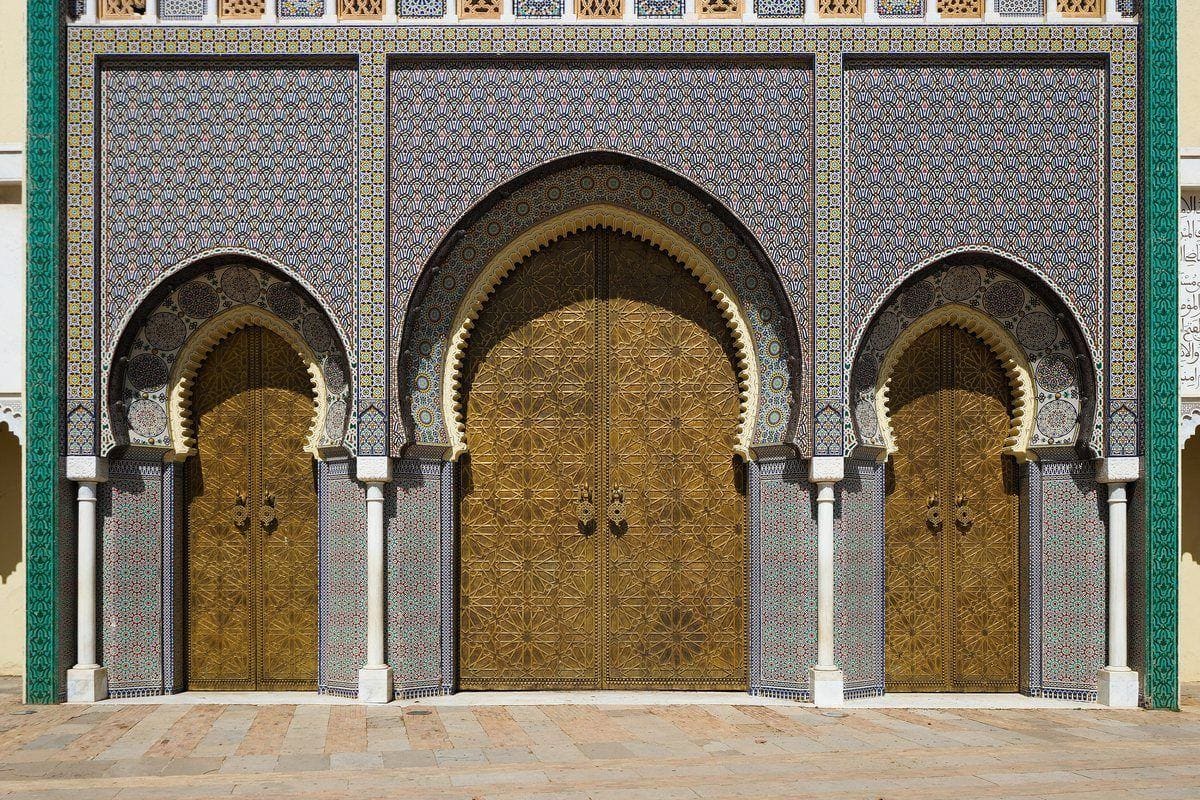
The main doors open onto the medina's busiest lanes; from outside you see the carved portals, the walls and the minaret above the rooftops. Non-Muslims do not enter, and this is respected quietly by everyone.
The al-Quaraouiyine library, restored with care and reopened in 2016, is among the oldest in the world, with manuscripts and early Qur'ans in its collection. Access is generally for researchers and occasional guided visits — ask locally or with your guide whether a visit is possible during your stay.
The lanes around the university are the academic heart of the medina: bookbinders, calligraphers and the smell of old paper mixed with cedar. Walk them slowly; this is where the university's daily life has always spilled into the street.
Al Quaraouiyine sits at the centre of Fes el-Bali: the souks, the Chouara tannery and the Bou Inania Madrasa are all within a short walk, making a natural half-day.
Fes el-Bali is a UNESCO World Heritage Site — the Medina of Fes. For the full city, start from our Fes guide.
| Season | Weather | Notes |
|---|---|---|
| March–May | 17–26°C | Ideal: comfortable walking in the medina lanes |
| June–August | 30–38°C | Visit early; the covered lanes stay cool but the courtyards are hot |
| September–November | 20–30°C | Excellent: warm days, fresh mornings, clear light |
| December–February | 10–18°C | Cool and quiet; the medina is at its most atmospheric |
Ramadan brings a special rhythm to the medina around the university, with the lanes filling for iftar after sunset.
We organise guided medina walks that tell the story of Al Quaraouiyine, the madrasas and the souks, with licensed guides and private drivers. Book an imperial cities tour from Fes or its 10-day version — and tell us your dates.
Al Quaraouiyine is a working religious site. Admire the courtyard from the permitted areas, keep quiet, and combine it with the nearby souks.
Founded in 859 by Fatima al-Fihri, it is one of the oldest universities in continuous operation, widely cited as the oldest existing university. Teaching has never stopped, and the modern institution still operates in Fes.
Fatima al-Fihri, the daughter of a wealthy merchant, who used her inheritance to found the mosque and place of learning in 859 — an extraordinary act in the 9th century.
Non-Muslims cannot enter the mosque-university or its prayer hall, but you can see the gates, walls and minaret from the medina lanes, and the story of the place is best told by a licensed guide.
The restored library, among the oldest in the world, reopened in 2016 and is generally open to researchers and occasional guided visits. Ask locally or through your guide whether a visit is possible.
The scholars' quarter with its bookbinders, the souks of Fes el-Bali, the Bou Inania Madrasa and the Chouara tannery — all within a short walk in the medina.
Fifteen to thirty minutes for the exterior and the quarter around it, more if you explore the souks and nearby madrasas as part of a medina walk.
Mornings are calmest and coolest, and spring or autumn are the most comfortable seasons. In summer, visit early; in winter the medina is quiet and atmospheric all day.
Modest clothing with shoulders and knees covered, comfortable closed shoes for the uneven lanes, and a scarf for sun or dust. Modesty is both respectful and practical here.
Hero photo: Abdel Hassouni · CC BY-SA 4.0 · Wikimedia Commons