Highlights
Fes Tanneries: Ancient Craft
By Morocco Explorers
7 min read
Chouara tannery guide: Fes's medieval leather pits, how the dyeing works, the best time to visit, terrace etiquette and where to buy real Fes leather.

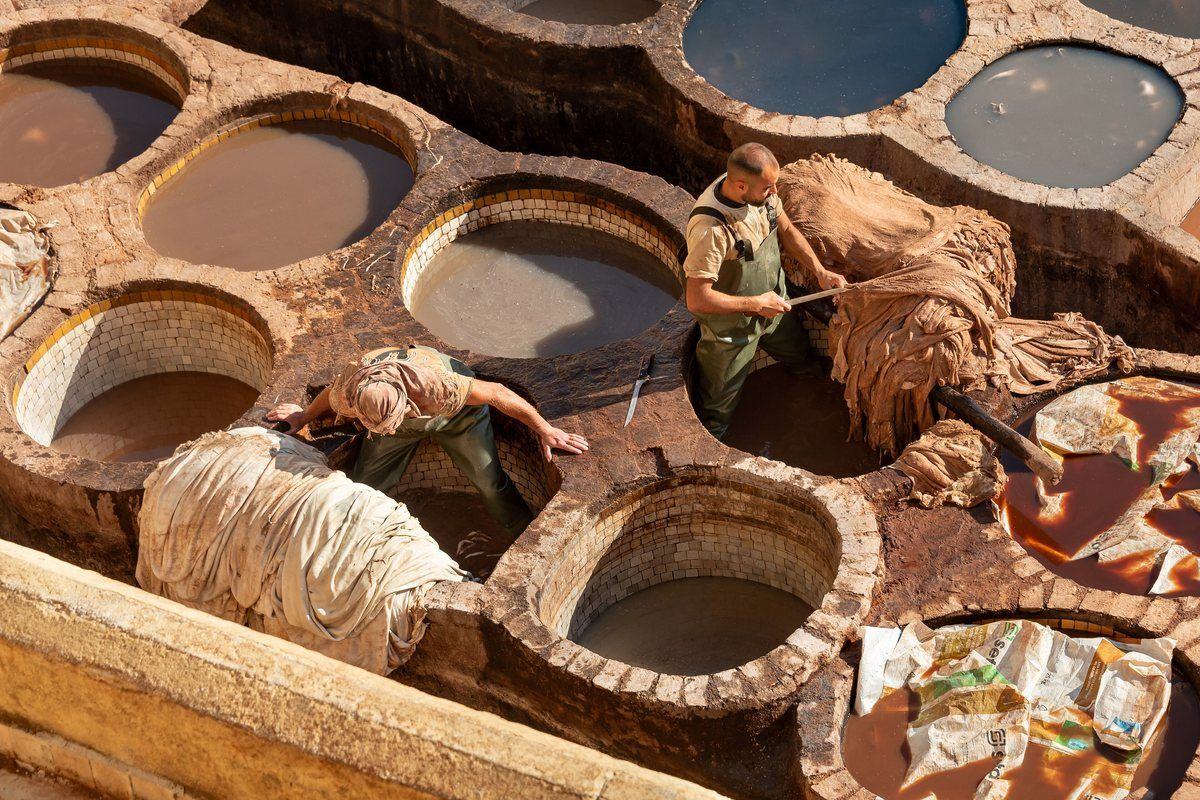
The Chouara tannery is the oldest working leather pit in Fes: a courtyard of stone vats in the medina where hides have been cleaned, tanned and dyed the same way since the Middle Ages — white lime pits, brown and red dye baths, and hides drying on the rooftops. You watch it from a terrace above; the shopkeepers hand you mint to hold against the smell. Morning is the best time, and it is one of the great free spectacles of the city.
This guide explains what you are looking at and how to visit respectfully — written by the local team at Morocco Explorers.
Fes has tanned leather for a thousand years, and the Chouara pits are the industry's living heart: not a demonstration for tourists but a working site where men stand in vats and turn hides by hand. Colour is everywhere — mustard, poppy red, indigo, brown — and the geometry of the vats makes it one of the most photographed places in Morocco. It is also a lesson in how the medina's crafts still function inside a UNESCO World Heritage Site: raw material, water, labour and market in one tight quarter.
The first vats hold a milky solution of lime and water, sometimes with pigeon droppings, which swells and softens the hides and removes hair. This stage is the source of the famous smell; workers stand in the vats in rubber boots and turn the skins by hand.
After scraping and tanning, the hides move to the dye pits: traditional colours came from poppy, saffron, indigo and pomegranate, while today many dyes are synthetic. Each pit is a different colour, and the pattern changes as the work moves through the week.
Finished hides are stretched on the surrounding rooftops to dry in the sun — the view from above, with coloured skins like flags, is the photograph everyone comes for.
| Season | Weather | Notes |
|---|---|---|
| March–May | 17–26°C | Ideal: comfortable medina walking and clear light on the pits |
| June–August | 30–38°C | Go early; the medina is hot and the tannery smell stronger |
| September–November | 20–30°C | Excellent: warm days, cool mornings, active dyeing |
| December–February | 10–18°C | Cool and quiet; the work continues, with fewer visitors |
The tannery operates year-round; in winter the dye colours fade a little with the cold, and in summer midday visits are best avoided.
We run guided medina walks that include the tanneries, the madrasas and the souks, plus private drivers and imperial city tours. Book an imperial cities tour from Fes, or browse all Morocco tours — and tell us your dates.
Visit the Chouara tannery from a terrace in the morning, when the light is good and the pits are active. Accept the mint sprig at the entrance.
It is the oldest and largest of the historic leather tanneries of Fes, a courtyard of stone vats in the medina where hides have been cleaned, tanned and dyed by hand for centuries.
You watch from the terraces of the leather shops around the pits. Access is usually free, but you are expected to look at the goods afterwards — a small purchase or a tip is courteous.
Mornings, when the light is good, activity is full and the heat is lower. The tannery works most days and is quieter on Fridays; summer midday visits are best avoided.
The white vats use lime and pigeon droppings to soften hides and remove hair — the ammonia smell is the signature of the process. Shops hand visitors mint to hold against their noses.
Yes from the terraces, but ask before photographing the workers, do not lean over the vats and avoid blocking the shopkeepers' views. A small tip keeps things friendly.
Twenty to forty minutes on the terrace, plus time in the leather shops. It combines easily with Bab Boujloud, the madrasas and the medina souks nearby.
Fes leather has a thousand-year reputation, and good babouches, bags and jackets are still made here. Check the stitching, lining and smell, compare shops, and bargain — quality varies widely.
Inside the medina, in the Blida quarter along the Oued Fes, close to Bab Boujloud and Place R'cif. A licensed guide helps first-timers find it in the maze of lanes.
Hero photo: Jorge Franganillo · CC BY 2.0 · Wikimedia Commons