Highlights
Marrakech Souks: Shopping Paradise
By Morocco Explorers
8 min read
Marrakech souks guide: how the market is organized, what to buy, how to bargain, how not to get lost and the best hours — a practical walk through the medina.

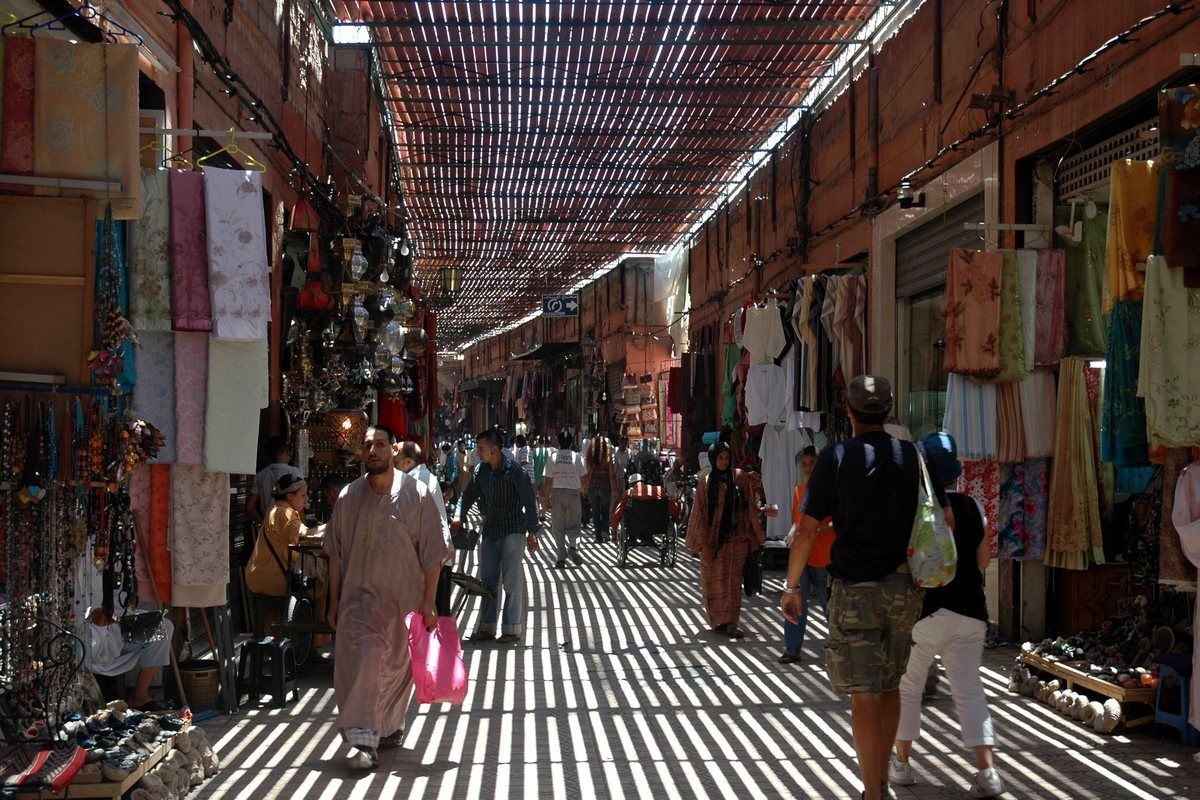
The souks of Marrakech are a living market, not a museum: a labyrinth of covered alleys north of Jemaa el-Fnaa where each quarter sells its own craft — leather, lanterns, carpets, spices, babouches and brass. Come in the morning when the traders are awake and the lanes are calm, decide a budget, and treat bargaining as part of the experience. Everything is walkable from the square.
This guide is a practical walk through the market — written by the local team at Morocco Explorers, who shop here every week.
The souks are medieval in the best sense: a market organized by trade, in the same lanes, for almost a thousand years. Nothing is staged. You will see brass being hammered, leather being dyed, carpets being unrolled and spice pyramids being rebuilt — and you will be offered tea while you think about a price. Even if you buy nothing, the walk is one of the great experiences of Marrakech.
Souk Semmarine is the spine of the market, running north from Jemaa el-Fnaa. Start here and turn off into the side lanes as your eye pulls you: nothing is far, and everything connects.
The old spice square is one of the souks' landmarks: baskets, spices, dried herbs and the memory of stranger trades. It is a good orientation point and a place to pause; see the Visit Morocco page.
Fixed-price cooperatives and museum shops are the honest shortcut if you dislike bargaining; the souks are cheaper if you enjoy the game.
The rules are unwritten but consistent. Ask the price, offer around a third to a half of it, and expect to meet somewhere in the middle. Stay friendly — the performance is part of the sale — and use your best card: the polite walk away. Agree the final price before anything is wrapped, pay in cash where you can, and only start negotiating for something you actually want. If a "guide" offers to lead you to the best workshop, agree the tip first or decline; a licensed guide, like ours on the medina walk, is a different and safer service.
Getting temporarily lost is part of the souks; truly lost is not. Note the gate you entered by, keep the Koutoubia minaret as your compass, and agree a meeting point if you split up. Motorbikes and handcarts move fast in the narrow lanes, so step aside. Keep bags in front, don't follow strangers down empty alleys, and accept that "just looking" is a complete sentence.
The souks sit inside the UNESCO-listed medina — the Medina of Marrakesh. For the rest of the city, see our Marrakech guide.
| Time | What to expect | Tip |
|---|---|---|
| 9–11am | Shutters rising, calm lanes, fresh light | The best hour to browse and photograph |
| 11am–2pm | Full activity, growing crowds | Bargain while the trader is fresh |
| 2–4pm | The local lull; some stalls rest | Good for cafés and museums |
| 4–7pm | Second wind, golden light in the alleys | Best atmosphere, busiest lanes |
In summer, mornings are essential; in winter, the souks are pleasant all day. Fridays are quieter around midday.
We are a local agency: guided medina walks that teach you the souks, shopping help with trusted artisans, and drivers for everything beyond the walls. Book a guided medina walk or browse all Morocco tours — and tell us your dates.
The souks are a maze, so go with a plan and a guide for the first visit. Compare prices, stay calm, and buy only what you genuinely want.
Lanterns, leather and babouches, rugs and blankets, spices and argan oil, ceramics, thuya wood and silver. Each trade has its own lane, and quality varies — check before you bargain.
Ask the price, offer around a third to a half, stay friendly and expect to meet in the middle. Agree the price before wrapping, pay cash, and use the polite walk away as your strongest move.
Mornings from about nine to eleven, when traders are opening and the lanes are calm; late afternoon has the best atmosphere but the biggest crowds. Fridays are quieter around midday.
Getting temporarily lost is normal — the lanes are a maze by design. Note your entry gate, use the Koutoubia minaret to orient yourself, keep bags in front and agree a meeting point if you split up.
Generally yes, including for solo travellers. Watch for pickpockets in the crush, decline pushy would-be guides, don't follow strangers into empty alleys, and keep phones and wallets secure.
A licensed guide helps first-timers find the good workshops and avoid commission traps. Agree the fee in advance; if an unofficial 'guide' approaches you in the street, you can simply decline.
Larger galleries and cooperatives accept cards, but most stalls are cash-only. Carry small notes for the best prices, and use ATMs near Jemaa el-Fnaa before you dive in.
Shop at fixed-price cooperatives and museum stores, or pay the first price cheerfully. Many travellers enjoy the negotiation, but it is optional — nobody will be offended if you simply accept the price.
Hero photo: DimiTalen · CC0 · Wikimedia Commons