Highlights
Jardin Majorelle: Garden Oasis
By Morocco Explorers
7 min read
Jardin Majorelle guide: the cobalt-blue garden of Jacques Majorelle, saved by Yves Saint Laurent, with tickets, timing, the Berber Museum and what to see nearby.

Jardin Majorelle is the most famous garden in Morocco: a one-hectare oasis of cobalt-blue buildings, cacti, bamboo and water lilies in the heart of Marrakech's new town, created by the French painter Jacques Majorelle and saved from ruin by Yves Saint Laurent and Pierre Bergé. Book your ticket online and come early — it is the most visited site in the city. An hour to ninety minutes is enough, and Gueliz's cafés and galleries are on the doorstep.
This guide covers the history, what to see and how to visit without the crowds — written by the local team at Morocco Explorers.
Marrakech is a city of noise and dust; the Majorelle is its antidote. Majorelle designed it as a painter's garden — colour first, then plants — and the famous "Majorelle blue" of the studio walls against green cactus and sky makes every corner a composition. Since its restoration it has become a pilgrimage for lovers of design, and the two museums beside it — the Berber Museum inside the garden and the Yves Saint Laurent Museum next door — turn a garden visit into half a day of art.
Jacques Majorelle, son of the furniture designer Louis Majorelle, settled in Marrakech in the 1920s and began planting his garden in 1923, filling it with species gathered on his travels and painting his studio in the intense blue that now carries his name. He opened the garden to the public in 1947; after his death in 1962 it fell into neglect and was nearly lost. In 1980 Yves Saint Laurent and Pierre Bergé bought it, restored the planting and the buildings, and protected it ever after — Saint Laurent's memorial stands in the garden, where his ashes were scattered. The Berber Museum opened in the studio in 2011, and the Yves Saint Laurent Museum beside the garden in 2017.
The painter's studio, now the Berber Museum, is the garden's icon: cobalt walls, yellow and green accents and reflecting pools. Visit the museum for jewellery, textiles and everyday objects from the Atlas and the Sahara.
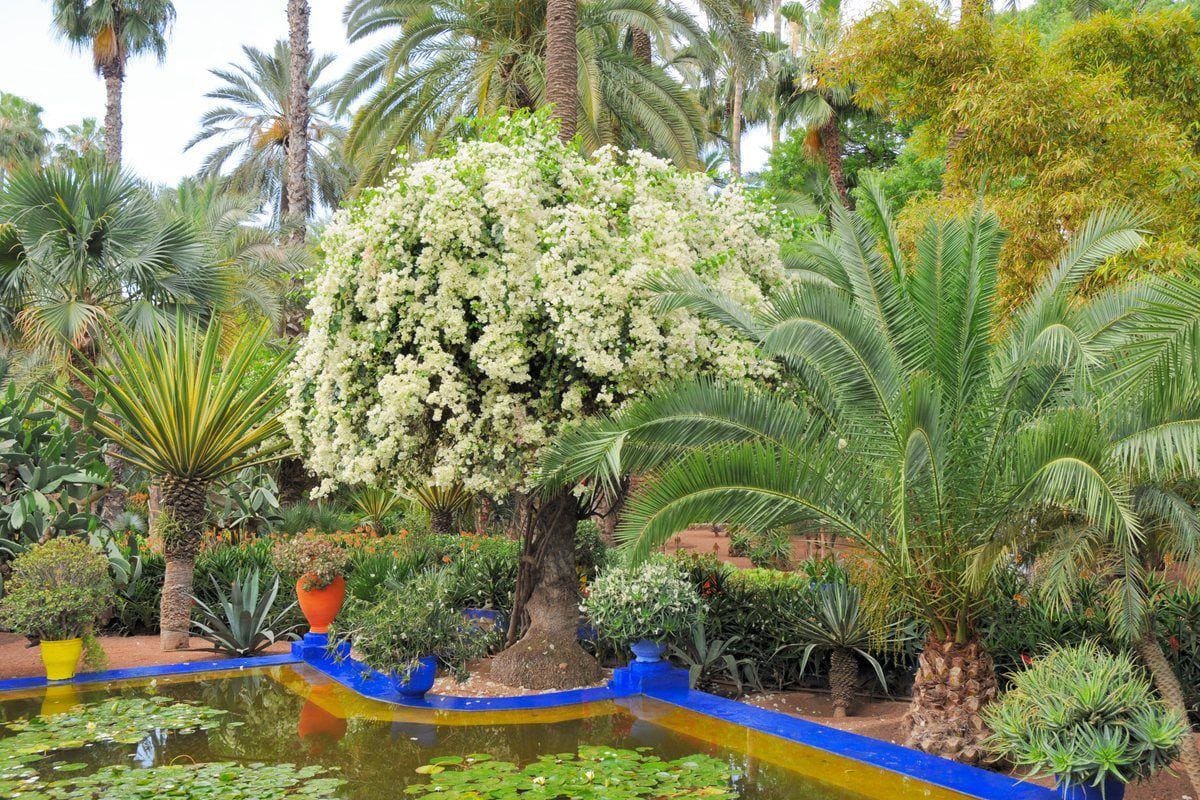
Majorelle was a plant hunter: tall cacti from the Americas, agaves, palms and a dense bamboo grove that feels like a tunnel in the heat. Labels identify the species if you want to garden along.
Water lilies, lotus and fish in the ponds, shaded pergolas and quiet corners make the garden feel larger than its one hectare. The memorial column to Yves Saint Laurent is the emotional heart of the visit.
Next door, the museum designed by Studio KO shows the designer's couture, sketches and films in a building that is itself a destination. Check the current exhibitions before choosing your ticket.
| Season | Weather | Notes |
|---|---|---|
| March–May | 22–28°C | Best: flowering season and comfortable mornings |
| June–August | 32–38°C | Only at opening; the shade sells out by late morning in the heat |
| September–November | 24–30°C | Excellent: clear light on the blue walls |
| December–February | 18–20°C | Quiet, crisp and photogenic; fewer queues |
Ramadan and school holidays change the rhythm; check times and book ahead for weekends and public holidays.
We are a local agency: private drivers, museum and garden visits, medina walks and desert evenings. Book a guided medina walk, add the Agafay desert evening, or browse all Morocco tours — and tell us your dates.
Jardin Majorelle is small and popular. Book a morning slot, arrive at opening, and leave time for the Berber Museum inside.
Yes — it is the most famous garden in Morocco, a small but perfectly composed oasis of cobalt blue, cacti and water. The Berber Museum and the YSL Museum next door make it a half-day of art and design.
Yes, booking online is strongly recommended: the garden is Marrakech's most visited site, timed tickets sell out in high season and the queue without a ticket can be long.
The first slots of the morning, when the garden is calmest and coolest, and spring for the flowering season. Avoid late morning in summer, when heat and crowds peak.
A French painter, son of the furniture designer Louis Majorelle, who settled in Marrakech in the 1920s, created the garden from 1923 and painted it in the intense cobalt blue now known as Majorelle blue.
He and Pierre Bergé bought the garden in 1980, restored the planting and buildings, and preserved it. Saint Laurent's memorial stands in the garden, where his ashes were scattered after his death in 2008.
An hour to ninety minutes including the Berber Museum. Add two hours if you also visit the Yves Saint Laurent Museum next door, which has its own ticket.
Yes, for personal use. Tripods and professional shoots need permission, drones are not allowed, and you should stay on the paths and not touch the plants.
In Gueliz, Marrakech's modern quarter, on Avenue Yacob El Mansour — about fifteen minutes by taxi from Jemaa el-Fnaa and the medina, with cafés and galleries around it.
Hero photo: Viault · CC BY-SA 3.0 · Wikimedia Commons