Highlights
Jemaa el-Fnaa: Heart of Marrakech
By Morocco Explorers
7 min read
Jemaa el-Fnaa guide: the UNESCO-listed square by day and night, where to eat, the performers, etiquette for photos and the best hours to visit.

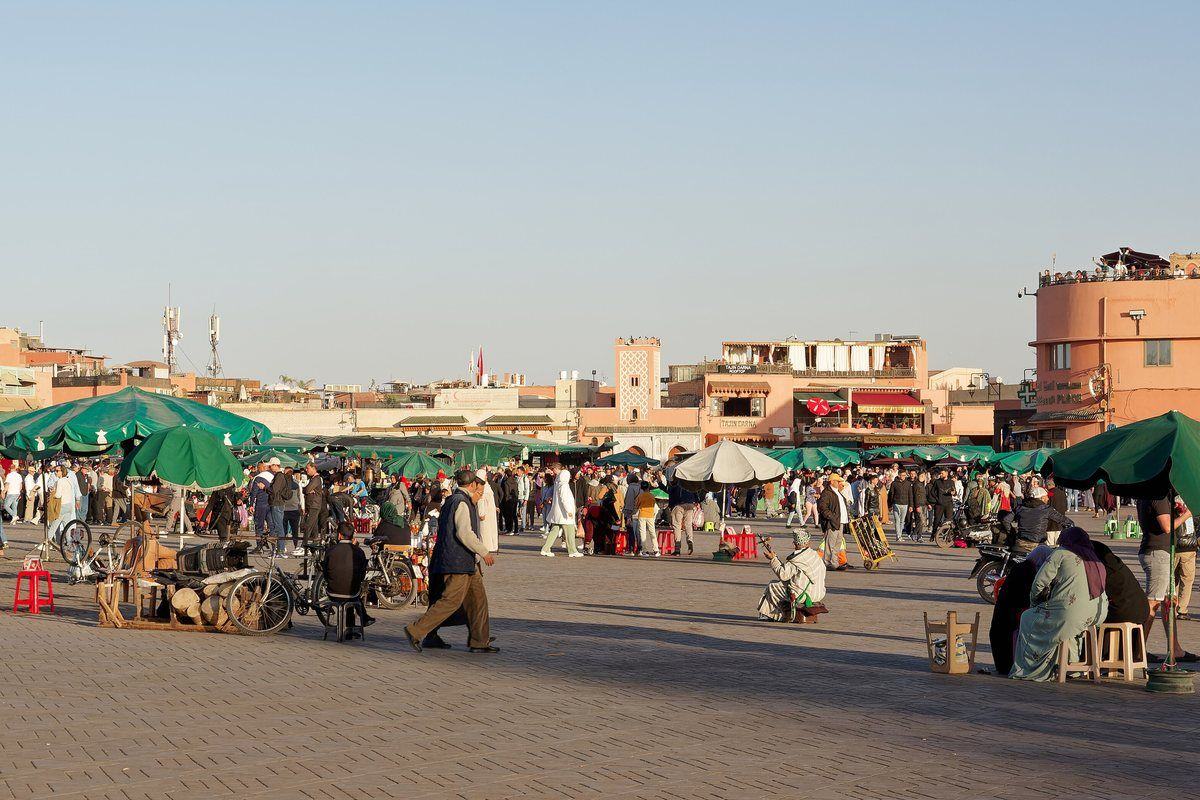
Jemaa el-Fnaa is the beating heart of Marrakech: a vast square inside the medina that changes character through the day — juice stalls and instruments in the morning, storytellers and musicians in the afternoon, and at dusk a city of smoking food stalls under the floodlights. Its living culture is protected by UNESCO as intangible heritage. Come twice: once before sunset, once after.
This guide tells you what to see, where to eat and how to behave — written by the local team at Morocco Explorers, five minutes from the square.
Jemaa el-Fnaa is not a monument you look at; it is a theatre you walk into. For centuries this was the assembly place of Marrakech — market, court, news desk and stage — and the traditions survive: circles of spectators around musicians, acrobats and storytellers, exactly the kind of living culture UNESCO recognized in 2001. Behind it stands the Koutoubia minaret, the city's landmark, which keeps the square oriented towards the sky. See our Koutoubia guide to pair the visit.
Early morning is the square at its most local: orange-juice carts, deliveries, a few early performers and the medina crossing on business. The light on the Koutoubia is best now, and photographs are easy.
By mid-afternoon the halqas form: Gnawa musicians with their guembri, chaabi bands, acrobats, henna artists and storytellers holding a crowd with nothing but words. Watch, listen, and let yourself be part of the circle.
As the sun sets, dozens of food stalls — numbered, with benches around them — take over the centre: grills, tagines, harira, brochettes, bread and sweet mint tea, all cooked in front of you. This is the square at its most famous, loudest and most delicious.
For a sit-down view, the roof terraces around the square serve tea and dinner above the crowd — the classic way to photograph the square at sunset. We also run a guided medina walk that ends here.
The performers are professionals working for their day's income, and the etiquette is simple: if you photograph or film them, expect to pay a small amount, and agree it before the camera comes out. Do not photograph people close-up without asking. For the animals — snakes, monkeys — many travellers now choose to watch without supporting the practice; if you feel uncomfortable, keep walking. Henna artists will offer to decorate your hand: fix the price and the design first.
| Time | What happens | Tip |
|---|---|---|
| 7–10am | Juice carts, deliveries, morning light | Best photos of the Koutoubia and the empty square |
| 4–6pm | Halqas: musicians, acrobats, storytellers | The cultural heart of the square |
| 6–8pm | Stalls assemble, smoke rises, crowds arrive | Arrive early for a table on the edge |
| 9–11pm | Peak food hour, drums, noise, festivity | Watch your phone and wallet in the crush |
We are a local agency based in Marrakech: guided medina walks, food evenings, desert trips and private drivers. Browse our Morocco tours or start from our Marrakech guide — and tell us your dates.
Jemaa el-Fnaa changes through the day. Come in the late afternoon for the performers, then stay for the food stalls and the lit square after dark.
For its living culture: the circles of musicians, acrobats and storytellers recognized by UNESCO as intangible heritage, and for the food stalls that take over the square every night at dusk.
Yes, the square is public and free. You pay only for what you consume — food, juice, tea — and for photos of performers if you take them, which is customary.
Come twice if you can: late afternoon for the performers and the halqas, and after sunset for the food stalls and the crowds. Early morning is calm and best for photographs of the square with the Koutoubia.
The evening food stalls are the highlight: grilled meat and brochettes, tagines, harira and bread, with sweet mint tea. Choose a busy stall with high turnover, agree prices first and expect to share a bench.
Generally yes, including at night, but the crowds are dense: watch your phone and wallet, ignore aggressive sellers and keep bags in front of you. Women should expect attention and can shut it down with a polite but firm no.
Yes, but agreement and a small payment are expected. Fix the price before you take the photo, avoid close-ups without permission, and feel free to skip the animal acts if you prefer not to support them.
The origin of the name is debated: popular translations include 'assembly of the dead' and references to a vanished mosque or gathering place. Locals simply call it the square, and its life needs no translation.
It is inside the medina, so you arrive on foot: any taxi or walk from your riad brings you to the edge of the square, and the Koutoubia, the souks and the Bahia Palace are all within minutes.
Hero photo: Jakub Hałun · CC BY 4.0 · Wikimedia Commons