Highlights
Bahia Palace: Royal Elegance
By Morocco Explorers
7 min read
Bahia Palace guide: the courtyards, zellige and painted ceilings of Marrakech's late-19th-century palace, its history, the best visiting hours and what to see nearby.

The Bahia Palace is the most beautiful palace of late-19th-century Marrakech: a series of courtyards, gardens and painted apartments built for the grand vizier Ba Ahmed, where the finest zellige, cedar and stucco craftsmen of the city worked for years. Allow an hour to ninety minutes; come at opening time to have the courtyards almost to yourself. It sits in the southern medina, a short walk from the Jemaa el-Fnaa and the Saadian Tombs.
This guide covers the history, the rooms worth your time and the practicalities — written by the local team at Morocco Explorers.
Most Marrakech monuments are about power and defence; the Bahia is about pleasure, comfort and display. Its name means "brilliance" or "beautiful", and it was built to impress guests of the vizier with light-filled patios, cool marble, carved plaster and ceilings painted in geometric patterns. Because it was a residence rather than a fortress, the scale is human and the decoration everywhere — which is why so many visitors call it the most photogenic site in the city.
Construction began under Si Moussa, a powerful court official, and was expanded by his son Ba Ahmed ibn Moussa, grand vizier and the real ruler of Morocco during the minority of Sultan Abdelaziz. Ba Ahmed filled the palace with the best craftsmen and named it, it is said, for his favourite wife. After his death in 1900 the palace was looted, and during the French protectorate it served as the residence of the resident-general, who added his own touches. Restored since, it is now one of the most visited sites in Marrakech.
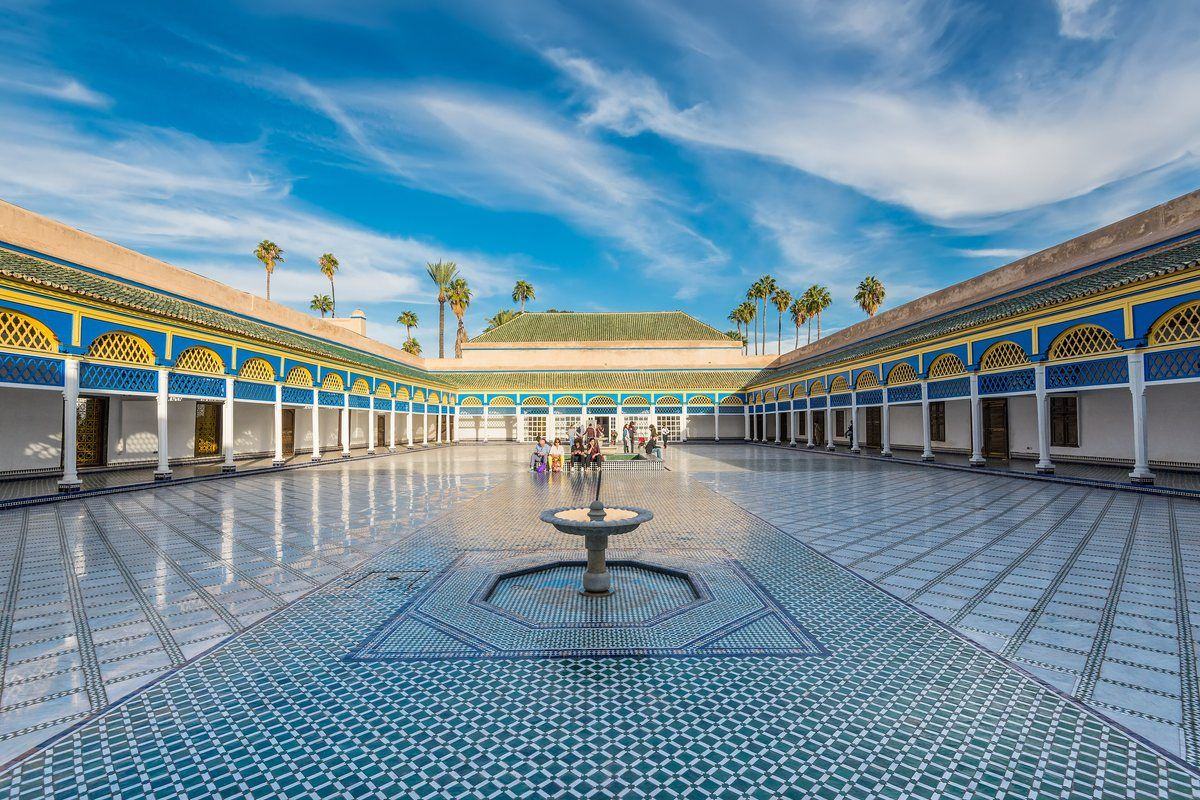
The Cour d'honneur is the palace at its most theatrical: a vast paved courtyard ringed by arcades, with a central fountain and walls of zellige. Early morning, when the light rakes across the tiles, is the moment.
Around the courtyards, the reception halls show the full repertoire: carved stucco panels, doors and ceilings in painted cedar, and marble floors polished by a century of footsteps. Look up — the ceilings are the hidden highlight.
Deeper in, smaller riads and garden courts were the family's private world: cool rooms around patios, shaded walks and fruit trees. It is quieter here, and the scale explains how a vizier's household actually lived.
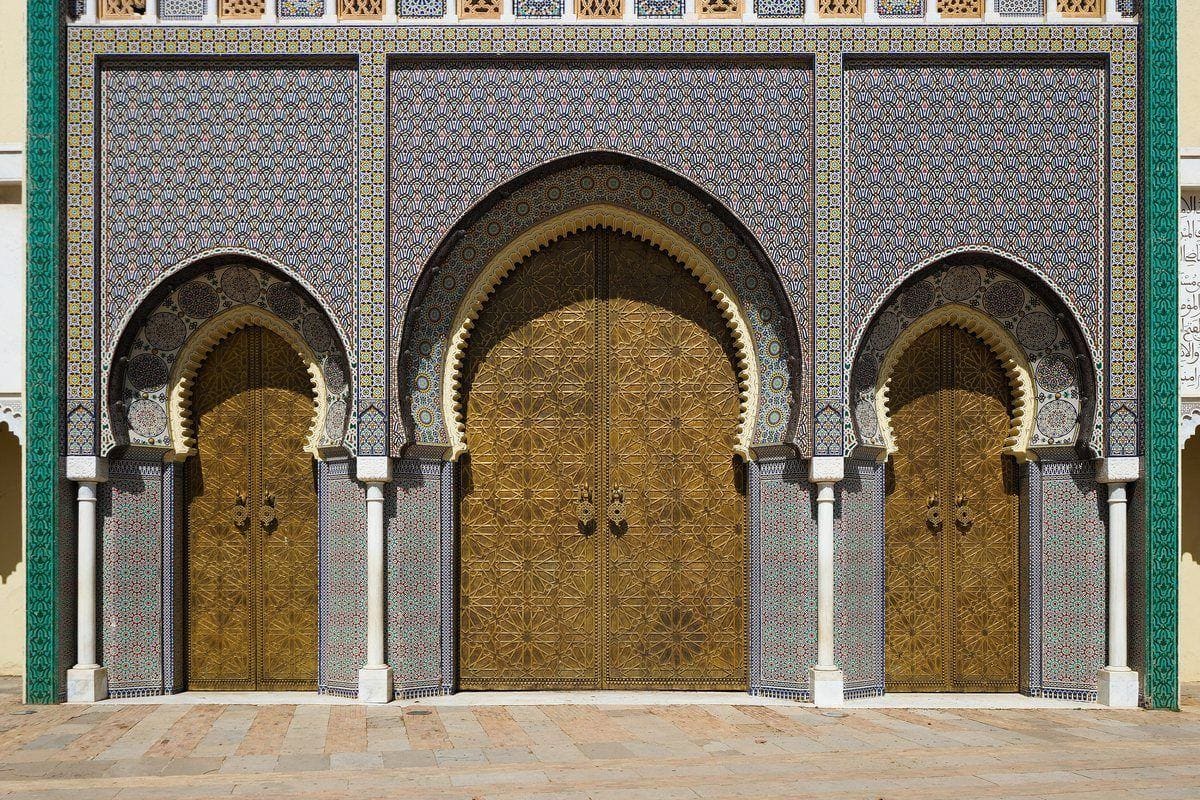
Zellige mosaic, muqarnas plasterwork and the contrast of white marble and warm cedar are the visual signature. Guides explain the symbolism of the patterns; a good guidebook does the same if you prefer to wander.
The whole southern medina is a UNESCO World Heritage Site: the Medina of Marrakesh. For the full context, start from our Marrakech guide.
| Season | Weather | Notes |
|---|---|---|
| March–May | 22–28°C | Ideal: gardens at their best, comfortable interiors |
| June–August | 32–38°C | Visit at opening; the palace's shade is a relief at midday |
| September–November | 24–30°C | Excellent: clear light through the courtyards |
| December–February | 18–20°C | Quiet, cool and photogenic; bring a layer for mornings |
Ramadan changes the rhythm of the medina around the palace, with shorter opening hours; check locally.
We are a local Marrakech agency: licensed guides, medina walks that include the palace, and private drivers for the days around it. Book a guided medina walking tour, add our Agafay desert evening, or browse all Morocco tours — and tell us your dates.
Visit the Bahia Palace in the morning, before the tour groups. Slow down in the courtyards and look up at the painted ceilings and zellij.
Yes — it is the most beautiful palace of late-19th-century Marrakech, with courtyards, gardens and decoration that show the city's crafts at their peak. An hour to ninety minutes is enough, and it pairs with the southern medina sights.
It was begun by the court official Si Moussa and expanded by his son Ba Ahmed, grand vizier and de facto ruler of Morocco around 1900, then looted after his death and later used by the French resident-general before being restored.
About one hour for the highlights and up to ninety minutes if you read every panel and photograph the courtyards. Mornings at opening are the quietest and coolest.
Arrive at opening or in the last hour of the day. Midday brings the tour groups and the heat, and the main courtyard offers little shade — in summer, early is essential.
Yes, photography is allowed. Avoid flash in the painted interiors, be patient in the crowded main courtyard, and do not touch the carved plaster and zellige.
Modest clothing with shoulders and knees covered, comfortable shoes for the marble and courtyard floors, and a hat or scarf for the sunny patios in summer.
The Mellah and its spice market, the Saadian Tombs, El Badi Palace and the Kasbah are all within minutes, and Jemaa el-Fnaa is a fifteen-minute walk through the medina.
The palace is not individually listed, but it stands inside the Medina of Marrakesh, which has been a UNESCO World Heritage Site since 1985 — see our Marrakech guide for the wider medina.
Hero photo: Val Traveler · CC BY-SA 4.0 · Wikimedia Commons