Highlights
Merzouga Dunes: Desert Magic
By Morocco Explorers
8 min read
The Merzouga dune experience: how a day and night on the Erg Chebbi sands unfolds — camel trek, sunset climbs, sandboarding, stargazing and camp comfort.

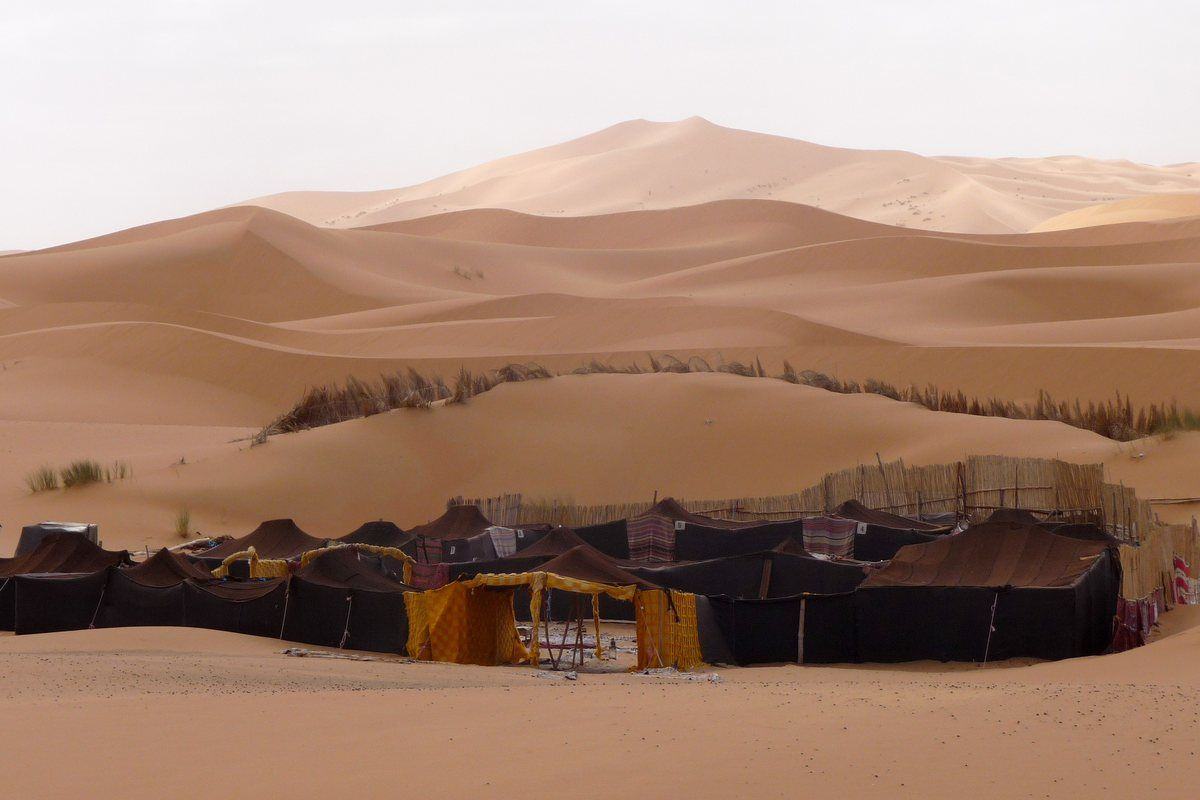
A night on the Erg Chebbi dunes is the memory most travellers keep from Morocco: the camel ride in as the light drops, the climb to a dune crest for sunset, dinner and drums at the camp, and a sky so full of stars it takes a while to find the familiar ones. The morning is the reward — sunrise from the sand before the jeeps arrive. The shape of a dune day is simple, and this guide walks you through it; for logistics, camps and routes, see our Merzouga guide and the 3-day tour from Marrakech.
This is the experience guide — written by the team at Morocco Explorers who sleep out here every month.
| Time | What happens | Tip |
|---|---|---|
| Mid-afternoon | Arrive from the gorges or Ziz valley; tea at the guesthouse | Leave your main luggage; take a small bag only |
| Late afternoon | Camel trek into the dunes (1–2 hours) | Scarf for wind, camera within reach |
| Sunset | Dismount and climb the nearest high dune | Walk on the crests; the light is best in the last 20 minutes |
| Evening | Dinner at camp, drums and Gnawa songs | Keep a layer for after the fire dies down |
| Night | Stargazing, silence, sleep in the tent | Headlamp on red mode to protect night vision |
| Dawn | Climb for sunrise, then breakfast and return | Start 40 minutes before sunrise; sand is cool underfoot |
Staying two nights changes everything: the second day has no transit, just dunes, and you can ride out to quieter camps or the seasonal lake at Dayet Srji when it holds water. Coming from the west, most itineraries pass Ouarzazate on the way.
The dunes are at their most beautiful in the hour around sunset and again at dawn, when low light carves long shadows along the crests and the sand turns from honey to deep orange. Pick a high dune with clean lines, climb barefoot where you can, and stay for the afterglow — the colour keeps changing after the sun is gone. In the morning, the same dune gives the reverse show with nobody else on it.
The ride from the village to camp is one to two hours at walking pace, with a guide leading the animals and time to take photographs along the way. Camels are tall and the motion takes a few minutes to get used to; hold the saddle frame, not the reins, and follow the guide's instructions. If riding is not for you, go by 4x4 and take a short camel loop for the photos — nobody minds.
Merzouga has almost no light pollution, which makes it one of the best stargazing spots in Morocco. Check the moon phase before you book: a new moon gives the Milky Way; a full moon lights the dunes like day and is beautiful in its own way. Let your eyes adapt for twenty minutes without white light, and use a red filter on torches. In summer the galactic core is high and bright; in winter the sky is crisper and the nights colder.
| Season | Day | Night | Notes |
|---|---|---|---|
| October–November | 25–30°C | 12–17°C | Best overall: warm days, cool nights, clear stars |
| December–February | 17–22°C | 2–8°C | Mild days but genuinely cold nights; check camp heating |
| March–April | 24–30°C | 10–15°C | Excellent; occasional spring sandstorms |
| May–September | 35–42°C+ | 20–28°C | Very hot: dawn and dusk only, camp with a pool if you can |
Book camp and camel trek early for the Christmas and New Year period, when the dunes are at their busiest.
We run private and small-group trips to Erg Chebbi with camel treks, camps we know personally and driver-guides who time the dunes for the best light. See the Merzouga guide for routes, our Sahara guide for comparisons, or browse Morocco tours — and tell us your dates.
Sleep in the dunes if you can, but choose a camp that respects the desert. Keep the evening quiet, take only photos, and leave the sand as you found it.
A camel trek into the sand in the late afternoon, a sunset climb on a dune crest, dinner and drumming at camp, a sky full of stars and a sunrise on the sand before you leave — usually with one night in a desert camp.
One night is the minimum and captures sunset and sunrise; two nights transform it, with a full dune day and time for quieter camps, sandboarding and stargazing without travel fatigue.
No — many travellers reach the camp by 4x4 and take a short camel ride for photographs. If you ride, the trek is one to two hours at walking pace with a guide leading the animals.
Yes — almost no light pollution makes Erg Chebbi one of Morocco's best stargazing sites. A new moon is best for the Milky Way; a full moon lights the dunes dramatically. Let your eyes adapt and use red light.
Yes — boards are easy to rent and the smaller slopes are ideal for beginners. Start gently, climb the crest between runs and keep the board away from the camps.
A small bag with water, a fleece and windproof layer, a scarf, a headlamp, sun protection, a power bank and your camera. Leave the main luggage at the guesthouse; trainers or sandals work on the sand.
From November to February, nights can drop near freezing, so a good sleeping bag, blankets and warm layers matter. In spring and autumn, a fleece is usually enough.
Yes with the right logistics: choose a camp with short transfers, keep camel rides brief and bring water, hats and layers. Families often prefer standard camps with more facilities and shorter walks.
Hero photo: gailhampshire from Cradley, Malvern, U.K · CC BY 2.0 · Wikimedia Commons