Destinations
Tetouan: White Dove
By Morocco Explorers
8 min read
Tetouan travel guide: the UNESCO Andalusian medina, the royal square, Spanish quarter, Rif crafts and the beaches of Martil and M'diq — Morocco's white dove of the north.

Tetouan is the white dove of northern Morocco: a compact, whitewashed city between the Rif mountains and the Mediterranean, whose medina is the most Andalusian in Morocco — rebuilt by refugees from Granada and still classed by UNESCO. It is quieter than Fes or Marrakech, easy to visit in a day or two, and the beaches of Martil and M'diq are fifteen minutes away. Spring and autumn are the seasons; winter is mild and green.
This guide covers the medina, the Spanish quarter and the coast — written by the local team at Morocco Explorers.
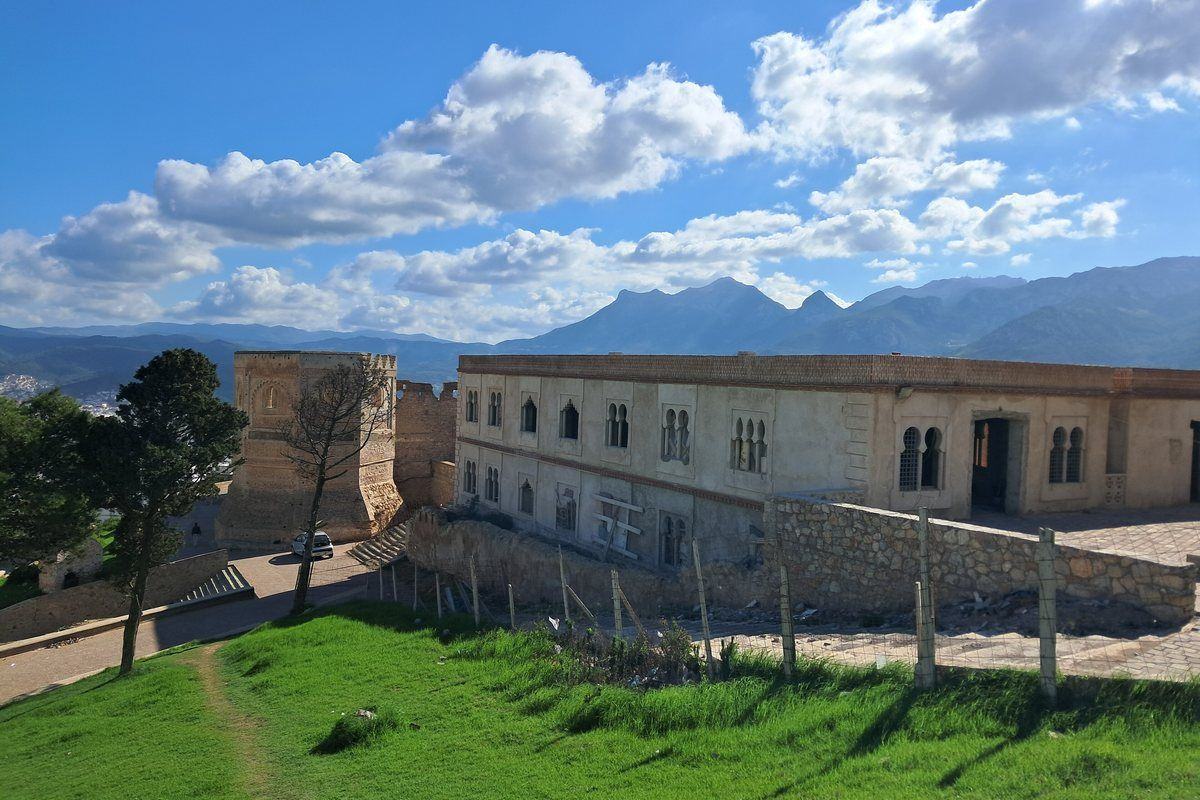
Between 1492 and the 17th century, Muslim and Jewish families expelled from Al-Andalus rebuilt their cities on this side of the Strait of Gibraltar, and Tetouan is the finest survivor of that exile: a medina of white houses, blue-green doors, tiled patios and carved plaster, laid out on a human scale. Later, Tetouan became the capital of the Spanish protectorate, which left a second city of tiled avenues, cafés and colonial facades beside the old walls. Add the Rif mountains behind and the Mediterranean in front, and you have one of the most likeable cities in Morocco.
Enter through Bab el Okla or Bab er Rouah and the medina opens into a maze of souks: Souk el Hots and Souk el Fouki for food and daily life, the Jewish quarter and its stories, workshops finishing wood, plaster and leather. It is small enough to wander without getting lost for long, and calm enough to enjoy it.
The heart of the white city: the square is framed by the Royal Palace (not open to visitors), the Spanish cathedral and a parade of white facades. It is where the city photographs itself at dusk.
The archaeological museum and the school of arts and crafts hold Tetouan's Roman finds and the living crafts of the Rif: embroidery, rugs, jewellery and painted wood. Tetouan is one of the best places in Morocco to buy traditional textiles, often at lower prices than the big cities.
Outside the walls, the Ensanche is a grid of Spanish colonial buildings, markets and cafés from the protectorate years — a rare architectural layer in Morocco, best taken with a coffee and a pastry.
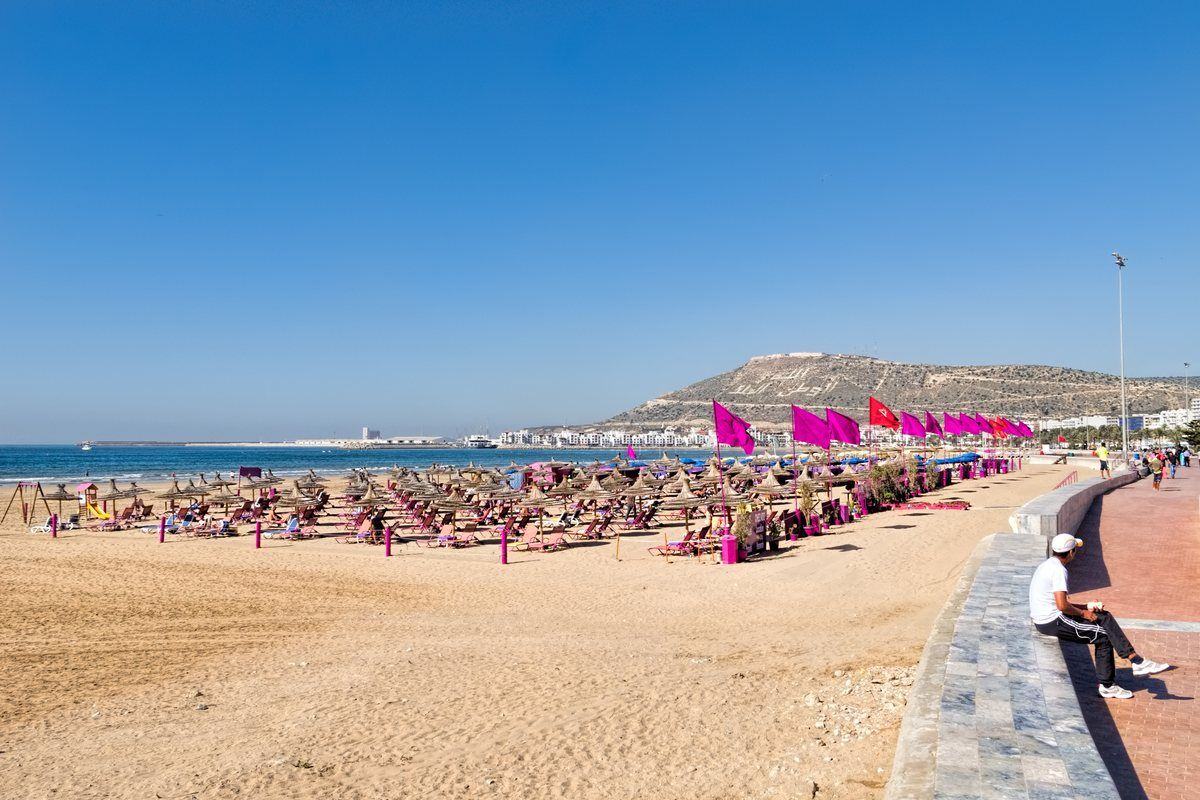
Fifteen minutes from the medina, Martil is the city's beach: a long, wide sweep of sand with restaurants and families in summer. A little further along, M'diq is a fishing port and marina with calmer coves, and Cabo Negro has the smartest beaches and hotels. The coast here is Mediterranean — warmer and gentler than the Atlantic — and ideal from June to September.
Tetouan sits naturally between Fes and the north: see our Fes guide and the 10-day imperial cities tour for route ideas.
| Season | Weather | Notes |
|---|---|---|
| March–May | 17–24°C | Ideal: green Rif slopes, comfortable walking in the medina |
| June–August | 25–32°C | Beach season in Martil and M'diq; the medina is hot at midday |
| September–November | 20–28°C | Excellent: warm sea, clear light, quiet streets |
| December–February | 12–18°C | Mild and sometimes wet; snow on the Rif peaks above the city |
Summer weekends bring Moroccan holidaymakers to the coast — book hotels in Martil and M'diq early, and enjoy the medina in the morning and late afternoon.
We organise private drivers and small-group tours through Tangier, Tetouan, Chefchaouen and the Rif, with licensed guides, comfortable cars and riads we know personally. Browse our Morocco tours or start from our Chefchaouen and Tangier guides — and tell us your dates.
Tetouan blends Andalusian and Rif culture. Wander the white medina, visit the archaeology museum, and leave time for a hammam.
Yes — its medina is a UNESCO World Heritage Site and the most Andalusian in Morocco, and it is far less crowded than Fes or Marrakech. The beaches of Martil and M'diq are fifteen minutes away.
Its Andalusian heritage: a whitewashed medina rebuilt by refugees from Granada, the UNESCO-listed old town, the Spanish protectorate quarter beside it, and its crafts — textiles, embroidery and painted wood.
About 60 km, roughly one hour by road. Grand taxis, buses and private transfers connect the two cities, and most travellers visit Tetouan as part of a northern loop with Tangier and Chefchaouen.
Yes — Martil is a long family beach fifteen minutes from the city, M'diq is a fishing port with calmer coves, and Cabo Negro has the smartest stretch. The Mediterranean is warmer than the Atlantic coast.
One full day covers the medina, Place Hassan II and the Spanish quarter. A second day adds the museums, the crafts souks and a beach afternoon in Martil or M'diq.
March to May and September to November for mild weather and comfortable sightseeing. Summer is beach season and winter is mild but can be wet, with snow on the Rif peaks above the city.
Yes — they are about 60 km apart, an hour and a half by road, and make a natural pairing with Tangier for a northern Morocco loop of two or three days.
Textiles, embroidery, rugs, Riffian jewellery and painted wood from the medina souks, plus Rif honey and olive oil from the market or cooperatives — often at better prices than the big cities.
Hero photo: Ideophagous · CC BY-SA 4.0 · Wikimedia Commons