Destinations
Tangier: Gateway Between Africa and Europe
By Morocco Explorers
7 min read
Tangier travel guide: the Kasbah and medina, Grand Socco, Café Hafa, the American Legation, Cape Spartel and where two continents and two seas meet.

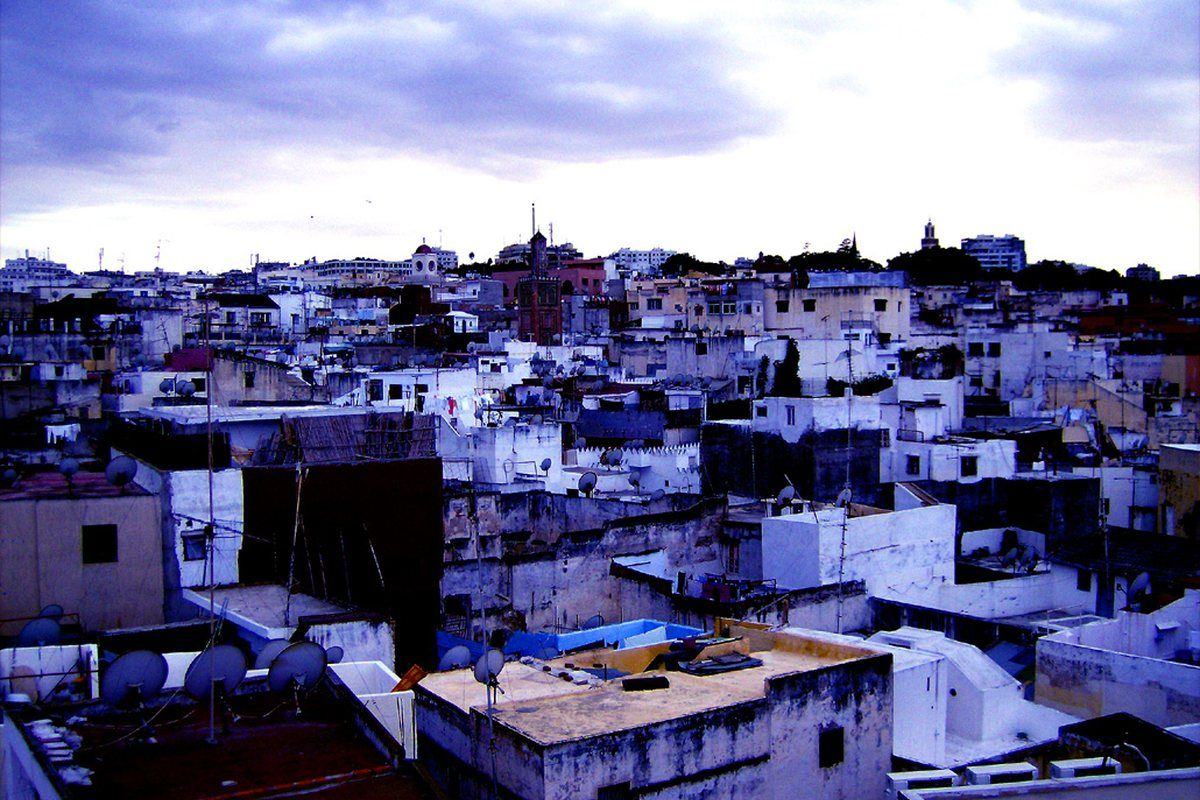
Tangier is Morocco's gateway between Africa and Europe: a white port city on the Strait of Gibraltar where Spain is only 14 kilometres away and the Atlantic meets the Mediterranean at Cape Spartel. Once an international zone and a haven for writers and spies, it now mixes a restored kasbah, a lively medina and some of the best fish restaurants in the country. Two days are enough, and it is one hour from Rabat by high-speed train.
This guide covers the sights, food and transport — written by the local team at Morocco Explorers.
In the 20th century Tangier was an "International Zone" (1923–1956) run by several powers at once, which attracted artists, writers and adventurers — from Matisse to Paul Bowles. That cosmopolitan memory, the Mediterranean architecture and the view of Spain across the water give the city a character no other Moroccan city has.
The Kasbah, at the top of the medina, holds the former sultan's palace — now the Kasbah Museum of Mediterranean cultures — and a café terrace with views over the strait. Below, the medina tumbles down to the Petit Socco, once the city's literary living room. Our Chefchaouen guide shows how easily northern cities combine.
Place du 9 Avril 1947 — the Grand Socco — is the gateway between the modern city and the medina. Nearby, in a 19th-century palace, the Tangier American Legation is the only US National Historic Landmark on foreign soil, with a small library and museum of the city's diplomatic history.
Café Hafa, hanging above the sea since 1921, serves mint tea on terraces where writers once watched the sunset. It is on the walk towards the beach clubs and the new Tangier Marina.
Twenty minutes west of town, the lighthouse at Cape Spartel marks the entrance to the strait, and the Caves of Hercules open straight onto the Atlantic. The drive along the coast passes the summer palaces and the beach at Achakkar.
Boulevard Pasteur, the Marché Central and the Villa de France (where Matisse painted) show Tangier's French-Protectorate layer. The city beach below the corniche is broad but busy; for swimming, locals go to Achakkar or the beaches on the Mediterranean side.
| Season | Weather | Notes |
|---|---|---|
| March–May | 16–22°C | Best overall: green hills, comfortable walking, migrating birds |
| June–August | 22–28°C | Warm and busy; book hotels early, beaches are full |
| September–November | 18–25°C | Excellent light, warm sea, fewer crowds after September |
| December–February | 12–17°C | Mild but rainy; storm days over the strait are spectacular |
Tangier is the natural start or end of a northern Morocco route: see our 10-day Imperial Cities tour and all Morocco tours for combinations with Chefchaouen, Fes and Casablanca — or read the Casablanca guide for the coastal road south.
Use Tangier as a two-day gateway: medina and Café Hafa on day one, Cap Spartel and the Caves of Hercules on day two.
Yes. Tangier has a restored kasbah and medina, genuine literary history, excellent fish restaurants and the unique geography of the Strait of Gibraltar, where Spain is visible across 14 km of water.
Two days cover the kasbah, medina, Grand Socco, the American Legation and Café Hafa, plus a half-day to Cape Spartel and the Caves of Hercules.
Yes. On clear days the Spanish coast is visible across the Strait of Gibraltar from the kasbah, Café Hafa and Cape Spartel — the two continents are only 14 km apart.
The Al Boraq high-speed train takes about 2h10 from Casablanca and 1h20 from Rabat to Tangier Ville. Tangier Ibn Battouta Airport (TNG) also has European and domestic flights.
Yes — ferries run from Tarifa (about 1 hour) and Algeciras (1.5–2.5 hours) to Tangier Ville or Tanger Med. Check schedules and passport requirements in advance, especially in summer.
Grilled fish at the port and fish market, Moroccan tagines with a Mediterranean accent, Spanish-style tapas and seafood rice, and mint tea at Café Hafa.
March to May and September to November, with mild temperatures of 16–25°C. Summer is warm and busy, and winter is mild but rainy, with dramatic storms over the strait.
Tangier is generally safe for tourists. As in other Moroccan cities, ignore unofficial guides, keep bags zipped in crowds, use official taxis and take normal precautions in the medina at night.
Hero photo: Julian Henderson from Bronx, NY, USA · CC BY-SA 2.0 · Wikimedia Commons