Destinations
Essaouira: Atlantic Charm and Sea Wind
By Morocco Explorers
8 min read
Essaouira travel guide: the UNESCO ramparts, Skala de la Ville, the fishing port, Gnaoua festival, kitesurfing, seafood and day trips from Marrakech.

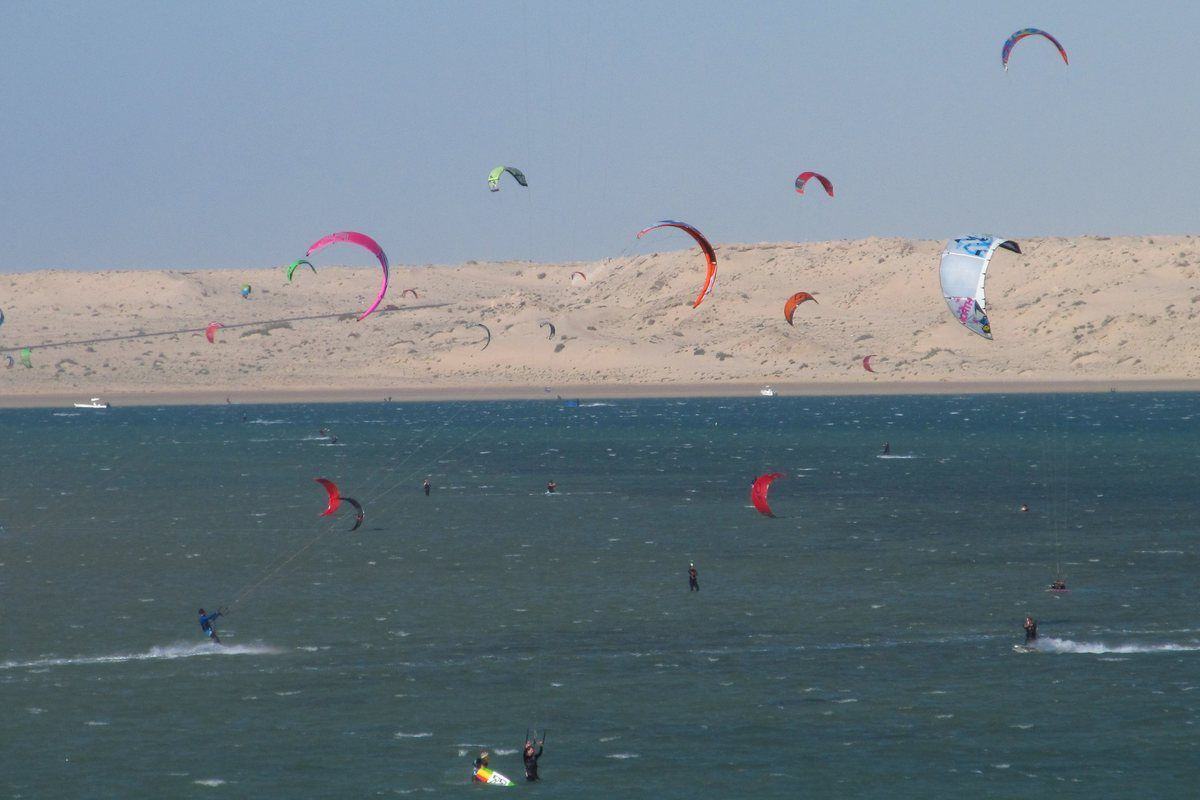
Essaouira is Morocco's Atlantic breeze made into a city: an 18th-century fortified port with white-and-blue houses, bronze cannons on the ramparts and seagulls over the fish market. The wind that keeps it cool also makes it one of Africa's best kitesurfing and windsurfing spots. Two days are enough, and it is only a 2.5-hour drive from Marrakech — which makes it the country's most popular seaside escape. April to October is the classic season.
This guide covers the medina, port, beaches and food — written by the local team at Morocco Explorers.
Built in 1764–65 by Sultan Mohammed III and designed with the help of French engineer Théodore Cornut, Essaouira (the old Mogador) is a rare example of a planned Moroccan city, classed by UNESCO. Its grid of streets, wind-beaten ramparts and mixed heritage — Arab, Amazigh, Jewish and European — give it a character unlike anywhere else in the country.
Walk the Skala de la Ville, the sea-facing rampart lined with 18th-century cannons, then the Skala du Port for the classic view of fishing boats and gulls. It is the most photographed place in Essaouira, and best at sunset.
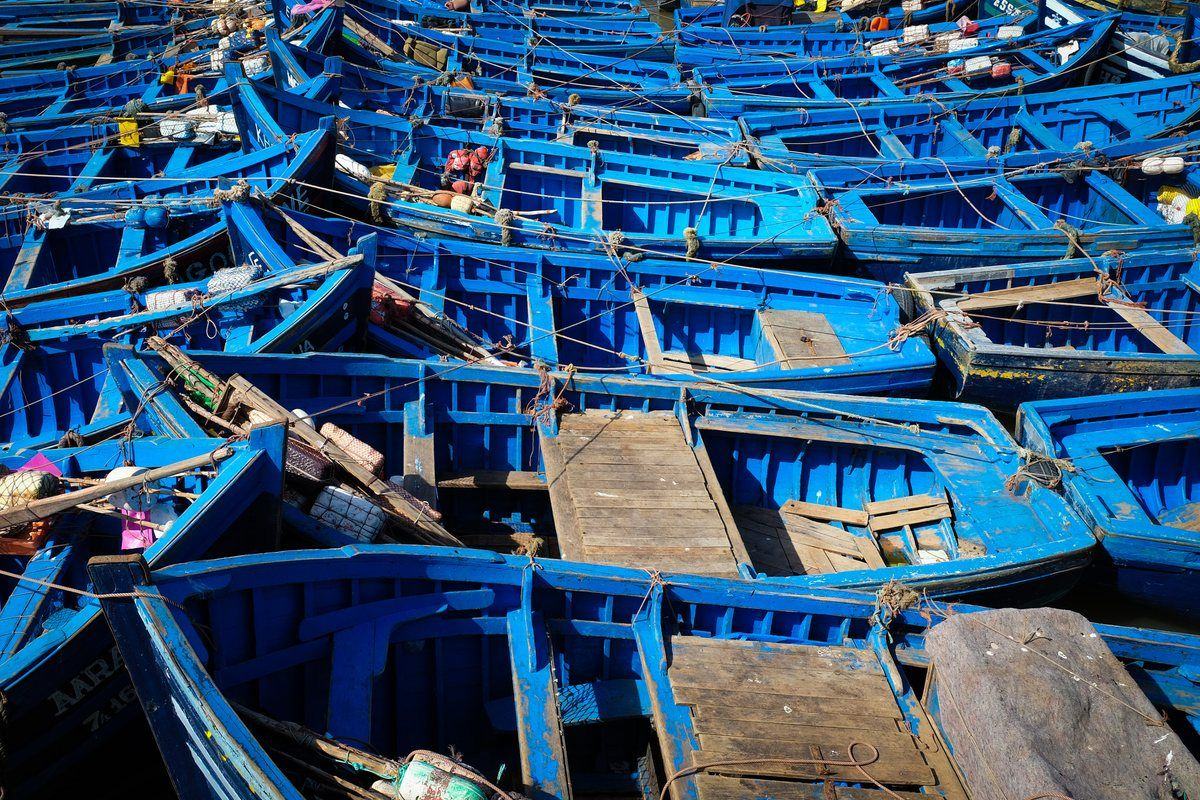
The blue wooden boats land their catch in the late morning; the market sells sardines by the bucket and grills them on the spot. This is one of the few working ports in Morocco where visitors can wander freely.
The medina's grid is easy to navigate: Avenue Oqba and the main squares lead to the Mellah, the old Jewish quarter, where the Simon Attias Synagogue has been restored. Essaouira once had a majority Jewish population and exported Mogador pottery and argan oil.
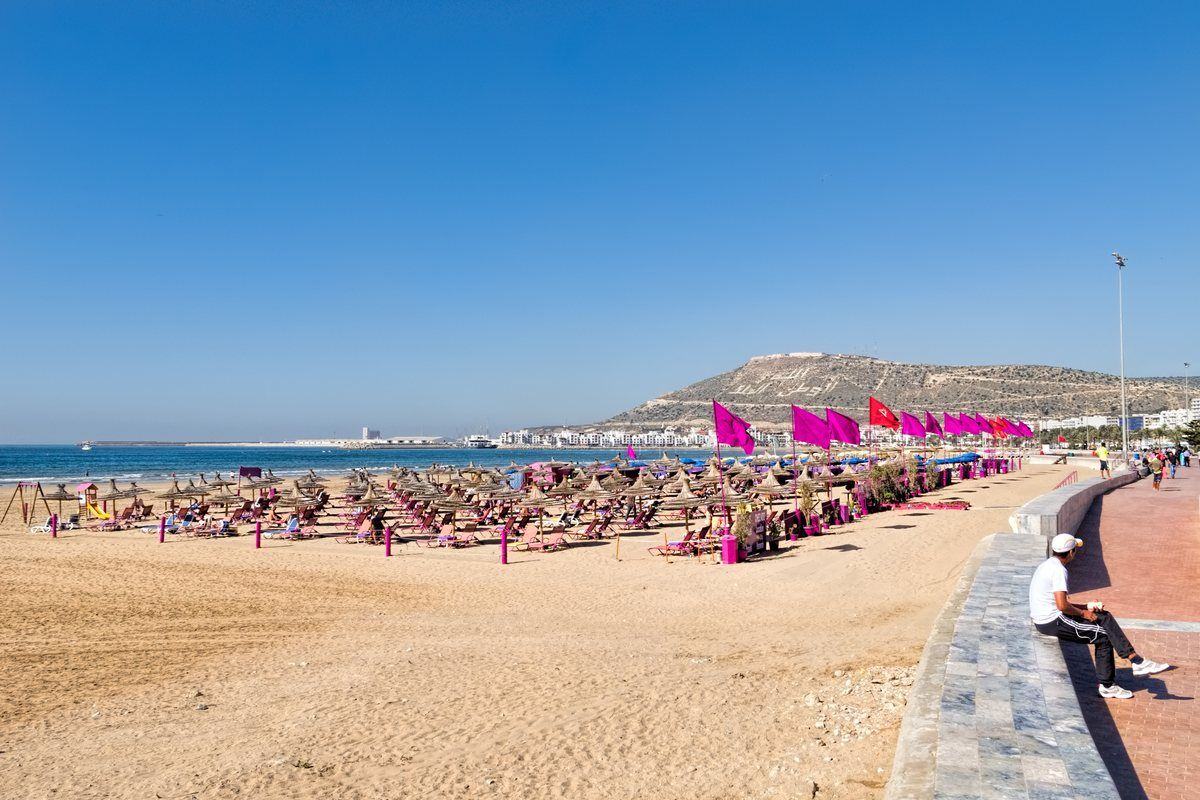
The wide beach south of the medina is good for swimming in summer, but the wind is the real draw: schools on the beach rent equipment and teach kitesurfing and windsurfing. Sidi Kaouki, 25 km south, is smaller and quieter; Moulay Bouzerktoun and Cap Sim are for advanced wave riders.
The Île de Mogador offshore is a protected nature reserve for Eleonora's falcon, visible by boat trips in calm weather. Inland, the road to Marrakech crosses argan groves where goats famously climb the trees to eat the fruit.
| Season | Weather | Notes |
|---|---|---|
| March–May | 17–22°C | Fresh and clear; wind builds through the day |
| June–August | 20–26°C | Warm days, cool wind, busy; the Gnaoua festival is in June |
| September–October | 21–26°C | Some of the best conditions for wind sports and swimming |
| November–February | 14–18°C | Quiet and mild; rain in winter, storms on the Atlantic |
Our Essaouira coastal day trip from Marrakech covers the medina, ramparts and seafood lunch — see all Morocco tours for longer coastal itineraries.
Essaouira combines naturally with Marrakech, the Atlas Mountains and the Atlantic coast towards Agadir. Tell us your dates and we will build the route — start from our Essaouira guide or browse all tours.
Essaouira is best with wind and a loose plan. Walk the ramparts, eat grilled fish at the port, and leave time for the beach.
Yes. It is a compact, UNESCO-listed seaside medina with working ramparts and port, excellent seafood, an arts scene and reliable wind for water sports — and it makes an easy 2.5-hour break from Marrakech.
Two days and one or two nights are ideal: one day for the medina, ramparts and port, and another for the beach, kitesurfing or the nearby village of Sidi Kaouki.
The trade winds blow most of the year, strongest in the afternoons from spring to autumn — which is why kitesurfers love it. Mornings are usually calmer, and winter has more rain and Atlantic swell.
April to October. May and September offer the best balance of warm days (20–26°C), manageable wind and swimmable sea; June brings the Gnaoua World Music Festival and the biggest crowds.
Yes, on the main beach south of the medina, though the wind can make the water choppy and the current strong. Families usually swim in the sheltered mornings; Sidi Kaouki is calmer for beginners.
Grilled sardines and fresh fish at the port, fish tagine with chermoula, and amlou — a spread of argan oil, almonds and honey. Argan products from local cooperatives are the best souvenir.
By road: 185 km, about 2.5 hours. Buses (CTM, Supratours) run daily, and private transfers or day tours are the most convenient. There is also an airport (ESU) with seasonal flights.
Yes — the wide sandy beach begins just south of the medina walls and stretches for kilometres towards Sidi Kaouki. It is a 10-minute walk from the main squares.
Hero photo: Fabien Fivaz · CC BY-SA 3.0 · Wikimedia Commons