Destinations
Casablanca: Morocco's Modern Metropolis
By Morocco Explorers
8 min read
A practical guide to Casablanca: the Hassan II Mosque, Art Deco city centre, the Habous quarter, the corniche, where to eat seafood and how to get around.

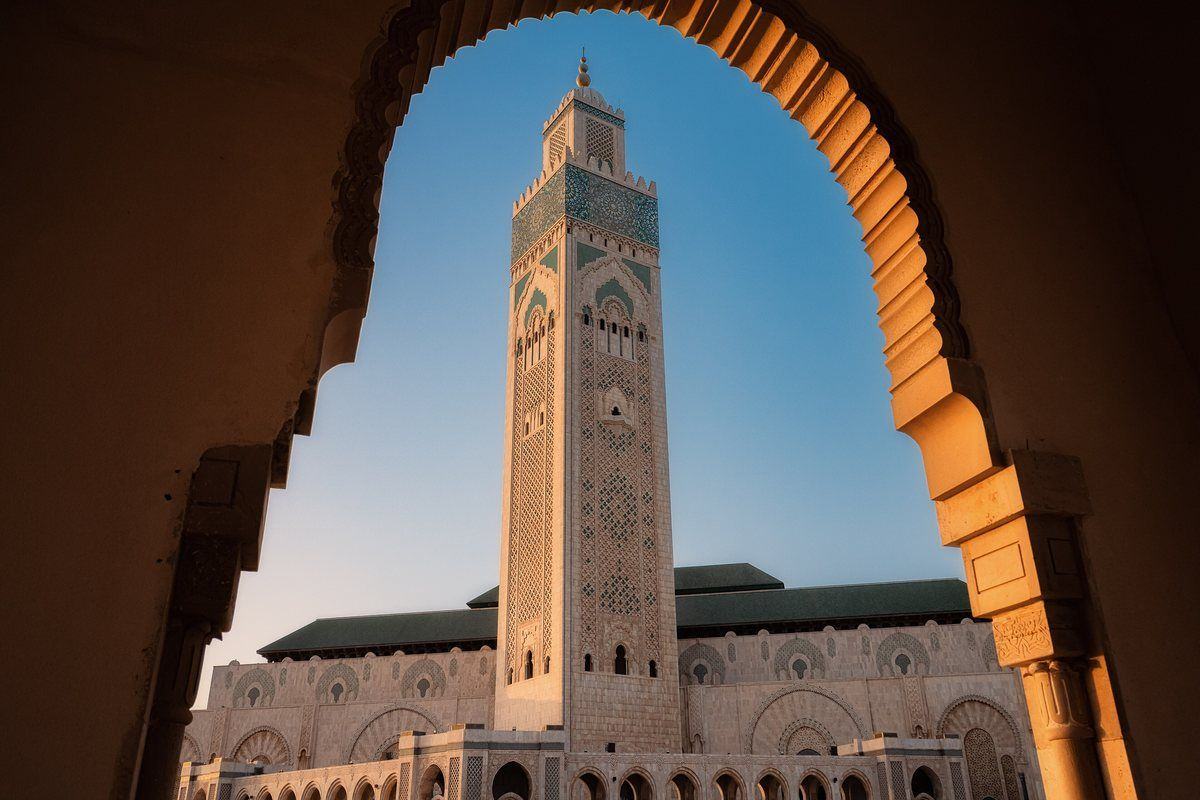
Casablanca is Morocco's largest city and its economic capital — a working port metropolis of more than three million people, famous for the Hassan II Mosque, one of the largest in the world, with a 210-metre minaret above the Atlantic. Most travellers pass through; with one or two days you can see the mosque, the Art Deco city centre, the Habous quarter and the corniche. The city works all year, with the mildest weather from March to June and September to November.
This guide covers the essentials, how to use the airport train and where to eat seafood — written by the local team at Morocco Explorers.
Casablanca is not a museum city like Fes or Marrakech — it is where modern Morocco lives and works. That makes it the best place to understand the country's 20th-century story: French protectorate architecture, bold Moroccan modernism, and a business skyline beside a traditional medina and fishing port.
Completed in 1993 and designed by Michel Pinseau, the Hassan II Mosque has the tallest minaret in Africa at 210 metres, a retractable roof, hand-carved cedar and plaster, and a glass floor over the sea. It is one of the few mosques in Morocco open to non-Muslim visitors, on guided tours several times a day (except during prayers). Book on arrival, dress modestly, and allow 45–60 minutes.
Combined tickets with the neighbouring museum of Moroccan religious culture are worth it. Sunset is the best time to photograph the exterior from the esplanade.
Walk Boulevard Mohammed V from Place des Nations Unies to the old medina: the Rialto cinema, the Marché Central, the Mahkama du Pacha and the Church of Sacré-Cœur are the highlights. The city runs guided Art Deco walks; a map from the tourist office is enough for a half day.
Casablanca's small medina, beside the port, is being restored and still trades in fish, olives and fabric. It is a 15-minute walk from the mosque and gives a real contrast with the modern city.
The Habous quarter, built in the 1930s, is Caablanca at its most photogenic: white arcades, the Pâtisserie Bennis for almond sweets, and the royal palace gates nearby.
The ocean road from Hassan II Mosque to Ain Diab is where Casablanca relaxes — beach clubs, seafood restaurants, the Morocco Mall and sunset over the Atlantic. The Corniche is best in the late afternoon.
| Season | Weather | Notes |
|---|---|---|
| March–May | 18–23°C | Best light and comfortable walking; some rain in March |
| June–August | 23–28°C | Warm but breezy; the coast keeps it pleasant |
| September–November | 20–26°C | Excellent: warm sea, clear days |
| December–February | 13–18°C | Mild and rainy; ocean swell, good for storm photography |
Casablanca is Morocco's main gateway airport, which makes it the natural start of an imperial-cities route: see the 7-day Imperial Cities tour from Casablanca, the 10-day version, or the 4-day Merzouga desert tour from Casablanca.
From Casablanca, the classic onward routes are Rabat and Fes to the north, Marrakech and the Atlas to the south, or Essaouira on the Atlantic coast. Read our Rabat guide and Marrakech guide, or browse all Morocco tours — we can build the itinerary from your arrival airport.
See the Hassan II Mosque on a guided interior tour, then walk the Corniche. Casablanca is a working city, not a resort; one full day covers the highlights.
Yes, for one or two days. The Hassan II Mosque alone justifies the stop, and the Art Deco centre, Habous quarter and corniche show a side of Morocco that Marrakech and Fes do not. It is also the country's main airport gateway.
Yes — it is one of the few mosques in Morocco open to visitors of all faiths, on guided tours several times a day outside prayer times. Tickets are bought at the entrance; modest dress is required.
One full day covers the mosque, the Art Deco city centre and the corniche. A second day adds the Habous quarter, the old medina, the Mahkama du Pacha and a proper seafood lunch.
The airport train runs to Casa-Voyageurs and Casa-Port in about 35 minutes and is the easiest option. Taxis take 30–45 minutes depending on traffic; agree the price or use a pre-booked transfer.
Casablanca is a year-round city thanks to the Atlantic. March to June and September to November offer the best combination of mild temperatures (18–26°C) and clear days; winter is mild and rainy.
Seafood: grilled sardines, sole and sea bream around the Marché Central and the corniche. Also Moroccan almond pastries at Pâtisserie Bennis Habous, bissara and msemen as street food, and French-Moroccan bistros in the centre.
It is generally safe, but as Morocco's biggest city it has pickpocketing around markets, stations and the old medina. Keep bags zipped, use official taxis, and apply normal big-city caution.
By train: Rabat about 1 hour, Tangier about 2h10 on the high-speed Al Boraq line, Marrakech about 3.5 hours, and Fes 3.5–4 hours. Private transfers are best for the desert and Atlas routes.
Hero photo: OussamaHamama · CC BY-SA 4.0 · Wikimedia Commons