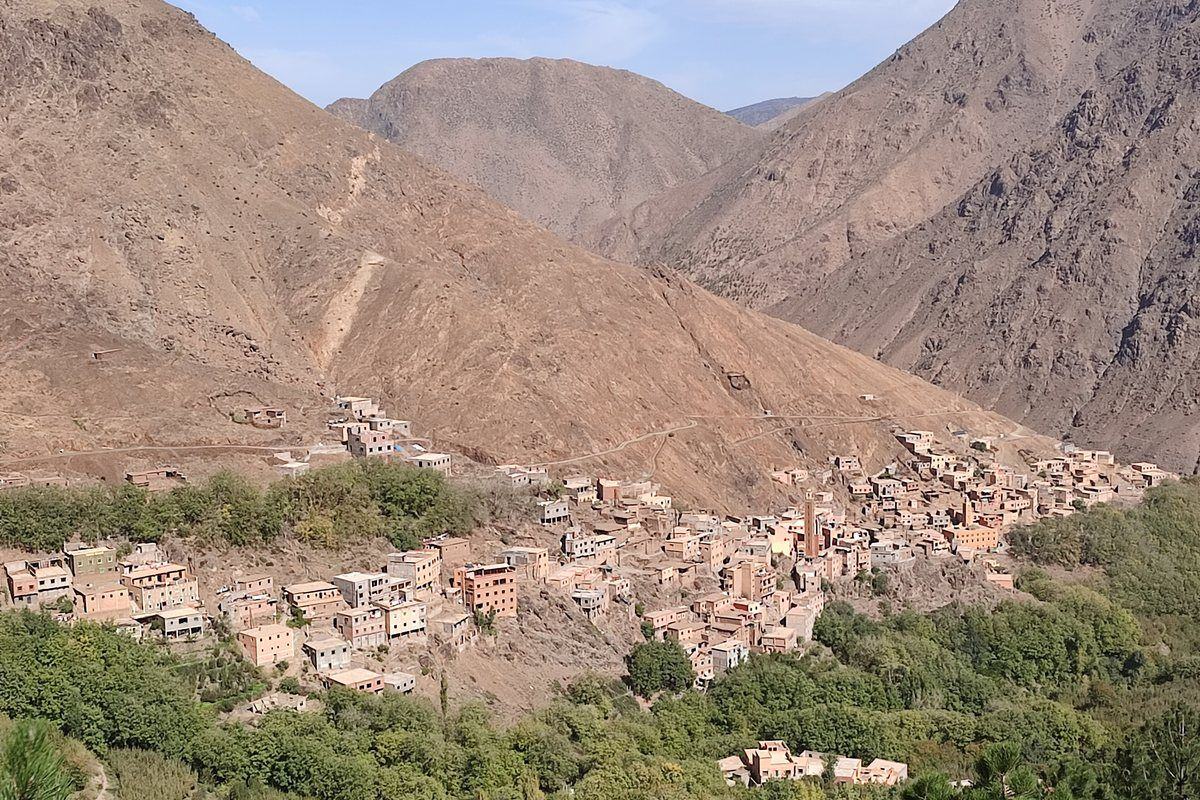
The Atlas are the mountains that make Morocco: a 2,500-kilometre range separating the Atlantic and Mediterranean coasts from the Sahara, with Mount Toubkal (4,167 m) — the highest peak in North Africa — less than 90 minutes from Marrakech. You can do it as a day trip (Imlil, Ourika or the Three Valleys) or as a two to five-day trek, and the best seasons are April to June and September to October.
This guide covers the valleys, villages, hikes and practical logistics — written by the local team at Morocco Explorers, who walk these trails year-round.
Why visit the Atlas Mountains
The High Atlas is a world of Amazigh (Berber) villages built in stone and earth, walnut groves, terraced fields and mule tracks that climb from 1,000 to over 4,000 metres. Unlike the desert or the coast, the mountains are a living culture: you sleep in family guesthouses, eat bread baked in clay ovens, and walk paths that have connected villages for centuries.
- Toubkal — North Africa's highest summit, a non-technical but demanding 2-day trek from Imlil.
- Imlil valley — the main trekking hub, with guided day walks to waterfalls and villages.
- Ourika and the Three Valleys — the easiest taste of mountain life, an hour from Marrakech.
- Oukaïmeden — one of Africa's highest ski areas, with lifts at around 2,600–3,200 metres in winter.
The valleys you can visit from Marrakech
| Valley | Drive from Marrakech | Best for |
|---|
| Imlil / Toubkal | 1.5 hours | Serious day hikes, Toubkal treks, mountain guesthouses |
| Ourika | 1 hour | Riverside cafés, Setti Fatma waterfalls, easy family walks |
| Ouirgane / Three Valleys | 1–1.25 hours | Berber villages, weekly markets, gentle walks |
| Aït Bouguemez (Happy Valley) | 4 hours | Remote trekking, authentic village life, multi-day routes |
Our guided trips cover the classics: the Atlas Mountains and Imlil day trip, the Ourika Valley day trip and the Three Valleys Berber villages tour.
Hiking and trekking options
- Half-day walks — Imlil to Aroumd and back, or Setti Fatma's seven waterfalls: 2–3 hours, suitable for most fitness levels.
- Day hikes — Imlil to Tizi Mzik pass (2,484 m) or the Lac d'Ifni area: 5–7 hours with a local guide.
- Toubkal ascent — two days with a night in a mountain refuge or camp: 4,167 m, no technical climbing, but altitude and early starts.
- Multi-day treks — Toubkal circuit, M'Goun massif (4,071 m) and Aït Bouguemez traverses, with mules carrying luggage.
- Winter — snow and ice from December to March; crampons and a guide are essential above 2,500 m.
Local mountain guides are licensed and mandatory for Toubkal; hiring one through us or the Imlil guides' bureau is the safest route.
When to go: Atlas by season
| Season | Conditions | Notes |
|---|
| March–May | 10–22°C in valleys | Wildflowers, snow on high passes; excellent trekking |
| June–August | 20–30°C | Warm valleys, cool nights; crowded in Imlil and Ourika |
| September–October | 15–25°C | Clearest views of the year, walnut harvest, ideal for Toubkal |
| November–February | 0–12°C | Snow above 2,500 m; ski season at Oukaïmeden; quiet villages |
What to bring
- Layers — mountain mornings and evenings are cold even in summer; a fleece and windproof jacket are essential.
- Shoes — broken-in walking shoes or boots with grip for loose scree and river crossings.
- Sun — hat, sunglasses and high-factor sunscreen; the altitude makes the sun stronger than on the coast.
- Water and snacks — refill at village fountains where possible, carry out your plastic.
- Cash — small notes for guesthouses, tips and village shops; there are few ATMs above the main towns.
Respecting mountain communities
- Dress modestly in villages — shoulders and knees covered.
- Ask before photographing people; a small purchase is better than a tip.
- Do not hand out sweets or pens to children; support schools and cooperatives instead.
- Hire local guides, mules and cooks — tourism is the mountains' main income.
Plan your Atlas trip with Morocco Explorers
We arrange day trips, private treks, Toubkal ascents, mountain guesthouses and combined Atlas–desert itineraries. Start from our Atlas destination guide or browse all Morocco tours — and read our Marrakech guide to connect the route.
Trip notes
Go with a local guide and start early. The road climbs quickly, so allow time for photo stops and a short walk in Imlil.
- Pack warm layers.
- Carry water and snacks.
- Respect village privacy.