Destinations
Zagora: Desert Oasis
By Morocco Explorers
8 min read
Zagora guide: the Draa valley palm groves, the Timbuktu 52 days sign, Amezrou and Tamegroute, Tinfou dunes and M'Hamid — the classic 2-day desert trip from Marrakech.

Zagora is the last green town before the desert: a palm oasis on the Draa river where the caravans once set off for Timbuktu — the famous sign reads "Tombouctou 52 jours". It is the goal of the classic 2-day desert trip from Marrakech, the gateway to the smaller Tinfou dunes and the big empty sands of M'Hamid and Erg Chigaga beyond. One or two nights is the usual stay; October to April is the season.
This guide covers what to see in the Draa valley and how Zagora compares with Merzouga — written by the local team at Morocco Explorers.
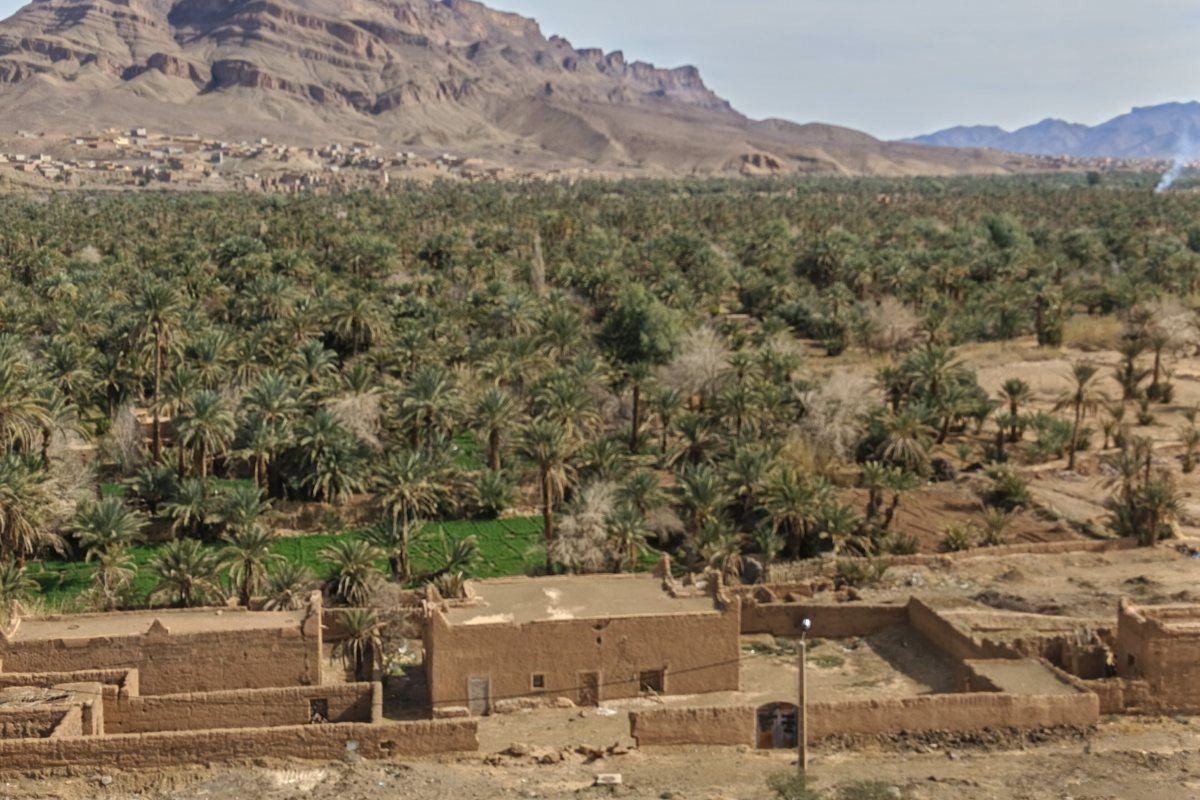
The Draa is Morocco's longest river, and in its middle course it supports a ribbon of palm groves, mud-brick villages and kasbahs that has been the southern highway of Morocco for a thousand years. Zagora is its capital: a market town of date traders, once the assembly point for caravans crossing the Sahara with salt, gold and slaves, and the place where the Draa's green finally gives way to stone. For travellers, it is the easiest place to combine a real oasis, kasbah architecture and a night in the desert without the long haul to Merzouga.
On the hillside above town stands the sign that has photographed thousands of desert travellers: Timbuktu, 52 days. (By camel, that was accurate.) Below, Zagora's streets hold a busy market, the old kasbah and a handful of cafés where the valley comes to trade.
Across the river, Amezrou is a village of Jewish and Amazigh memory: its mellah (Jewish quarter), the old synagogue and the workshops where Draa silversmiths still work. The silver jewellery made here is among the finest in southern Morocco.
Twenty minutes south, Tamegroute grew around a Sufi zaouia that owns a celebrated library of old manuscripts. The village is also known across Morocco for its green-glazed pottery, made in kilns you can visit, and for the ksour of the valley nearby.
The small golden dunes of Tinfou, close to Tamegroute, are where many short desert trips have their camel ride and sunset. They are modest compared with Erg Chebbi, but easy to reach and beautiful at the right hour.
Ninety kilometres south along the Draa, M'Hamid El Ghizlane is the last village before the open desert and the launch point for the wilderg of Morocco, Erg Chigaga, reached by 4x4. Camps there are fewer, simpler and further from the road — the choice of travellers who want silence more than comfort.
Both are desert experiences, and they are different. Zagora is closer to Marrakech (a real 2-day trip), with a genuine oasis, kasbahs and small dunes. Merzouga and Erg Chebbi are far, but the dunes are enormous and the camps — including luxury ones — are the best in the country. If your dream is tall dunes, go to Merzouga; if you want an oasis and a night under the stars without a three-day drive, Zagora is the answer. Read our Sahara guide for the full comparison, or take the longer circuit: 5-day desert cities tour from Marrakech.
| Season | Weather | Notes |
|---|---|---|
| October–November | 25–30°C | Ideal: date harvest, warm days, cool nights |
| December–February | 17–22°C | Mild days, cold nights; the desert is quiet |
| March–April | 24–30°C | Excellent; occasional spring sandstorms |
| May–September | 35–42°C+ | Very hot; limit activity and drink constantly |
Nights in the desert are cold from November to February — bring layers for the camp, whatever the daytime temperature.
We run private and small-group tours from Marrakech and Ouarzazate through the Draa valley to Zagora, M'Hamid and the camps, with licensed driver-guides and comfortable 4x4s. Browse our Morocco tours or start from our Sahara guide — and tell us your dates.
Zagora is a slower desert stop. Explore the palm groves, visit Tamegroute, and use it for a short camel trek rather than a rushed Sahara dash.
Yes — for the Draa valley palm groves, the Timbuktu 52 days sign, the kasbahs of Amezrou and Tamegroute's library and pottery. It is the closest real desert-and-oasis experience to Marrakech, doable in two days.
Zagora is closer and greener, with an oasis, kasbahs and small dunes. Merzouga has Morocco's great dunes and the best camps, but is much further. Choose Zagora for a 2-day trip, Merzouga for tall dunes.
About 360 km over the Tizi n'Tichka pass and Ouarzazate, roughly seven hours of driving. Most travellers do it as a 2-day trip with a night in the valley or at a camp.
Tinfou is a small group of golden dunes near Tamegroute, south of Zagora, used by many short desert trips for camel rides and sunset. They are smaller than Erg Chebbi but easy to reach and lovely at golden hour.
Tamegroute is a holy village with a zaouia library of old manuscripts and a long tradition of green-glazed pottery. You can visit the library and the pottery workshops, and see ksour along the valley.
Yes — via M'Hamid El Ghizlane, roughly 90 km south, then by 4x4 into the desert to Erg Chigaga. Camps there are fewer and more basic than at Merzouga, but the emptiness is exceptional.
October to April, with October–November and March–April the best: warm days, cool nights and the date harvest in autumn. Summer is extremely hot and best avoided unless you stick to dawn and dusk.
Two days from Marrakech is the classic trip: Ait Benhaddou and Ouarzazate on the way, a night in the valley or a camp, and Tamegroute or Tinfou before returning. Three days makes it relaxed.
Hero photo: Sylvestre BOCCO · CC BY-SA 4.0 · Wikimedia Commons